
#85 June 5, 2026
Renovation of Angers Cathedral: Humbleness and Honesty
We have built a new galleria for the Saint-Maurice Cathedral, a symbol of Angers, an ancient city in France. Adding a new wing by a contemporary architect to a Romanesque style church is a truly exceptional event. Behind this project lies an intense debate over heritage conservation, a topic deep enough to fill an entire book.
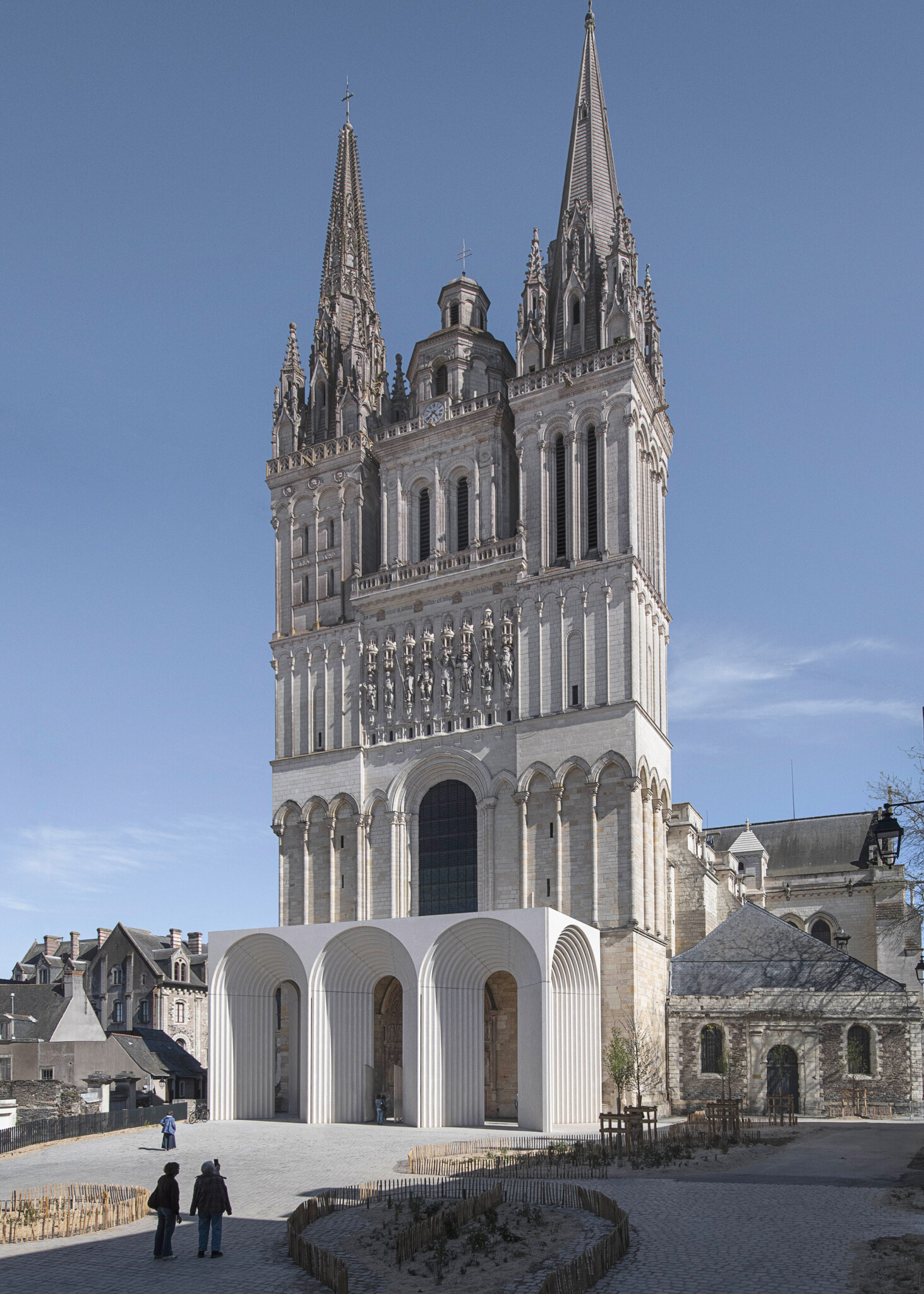 © Guillaume Amat
Through a 2009 survey, medieval polychrome colors were discovered on the Romanesque façade of Saint-Maurice. The construction of a galleria, or portico, to protect them became an urgent issue for the Ministry of Culture, and a design competition for contemporary architects was held to create a new design that harmonized with the existing façade.
 © Guillaume Amat
Around the same time, the fire at Notre-Dame in Paris occurred. In contrast to that case of perfect restoration, Angers chose a different method of inheriting history through contemporary architecture. Showing these two contrasting methods through the restoration projects of two national treasures became a subject of discussion as a new step in cultural property administration.
Compared to the other entries, our competition proposal was praised as the one that least reflected the architect's ego and was the humblest, leading to our selection. On the other hand, there was criticism questioning why a Japanese architect should handle a Catholic cathedral. Some critics from contemporary architects on social media also called the design not innovative.
However, this “humbleness” was exactly what we aimed for. When you look closely and carefully at Saint-Maurice, you clearly see that history is connected and handed down through the accumulation of humbleness. Starting with the twelfth-century Romanesque style, the cathedral was expanded and modified over time through Gothic, Renaissance, and Baroque styles. The architects of each era were certainly not choosing between the binary options of innovation versus preservation. Instead, they focused on how to compromise and find a balance with the work of their predecessors within the limits of their own eras. The accumulation of these humble practices created the beauty of Saint-Maurice today.
Another element we prioritized was structural honesty. It is often pointed out that the beauty of Romanesque or Gothic architecture lies in its structural honesty. We believed that trying to connect with the past through ornamentation would inevitably weaken the architecture. Being humble is deeply connected to being structural. A humbleness that does not seek to decorate itself naturally leads to structural honesty. This is completely different from attempting acrobatic engineering. Being structurally honest naturally brings stability and tranquility to a building.
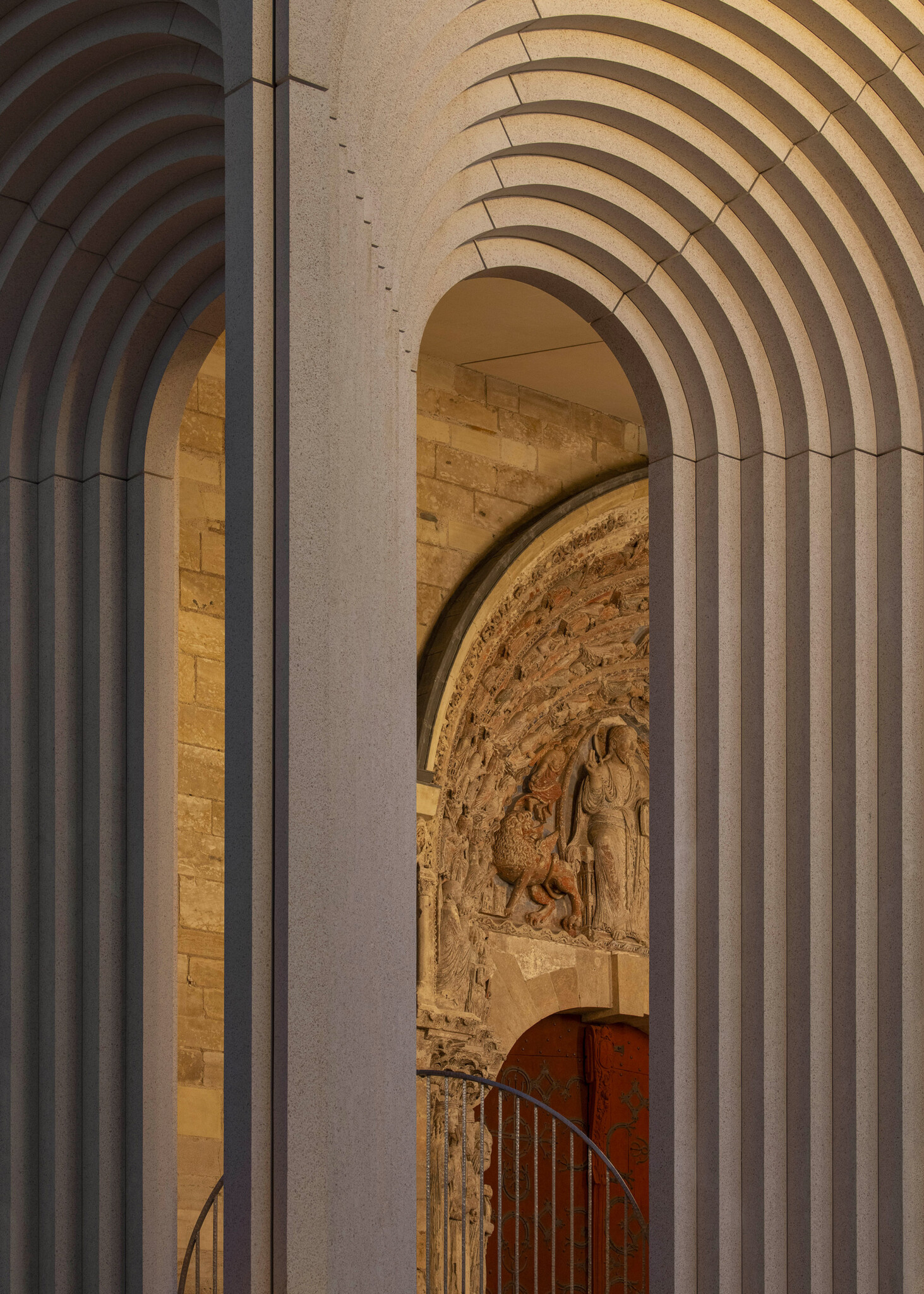
The most successful part of the planning was the combination of thin, diagonal structural walls with ribs. Through the magic of 45-degree geometry, we minimized the impact on the underground framework from the Romanesque period while creating a lightweight wall surface that feels thick and deep. This sense of depth is further amplified by ribs that repeat a 21cm module. People are drawn into the layered arches and feel a warm sense of security, as if they are being protected.
Through this 45-degree magic, the arches create a concave, alcove-like space facing both the inside of the galleria and the outside square. This intimate concave space transforms the front square from a characterless outdoor area into a semi-indoor space that induces various activities.
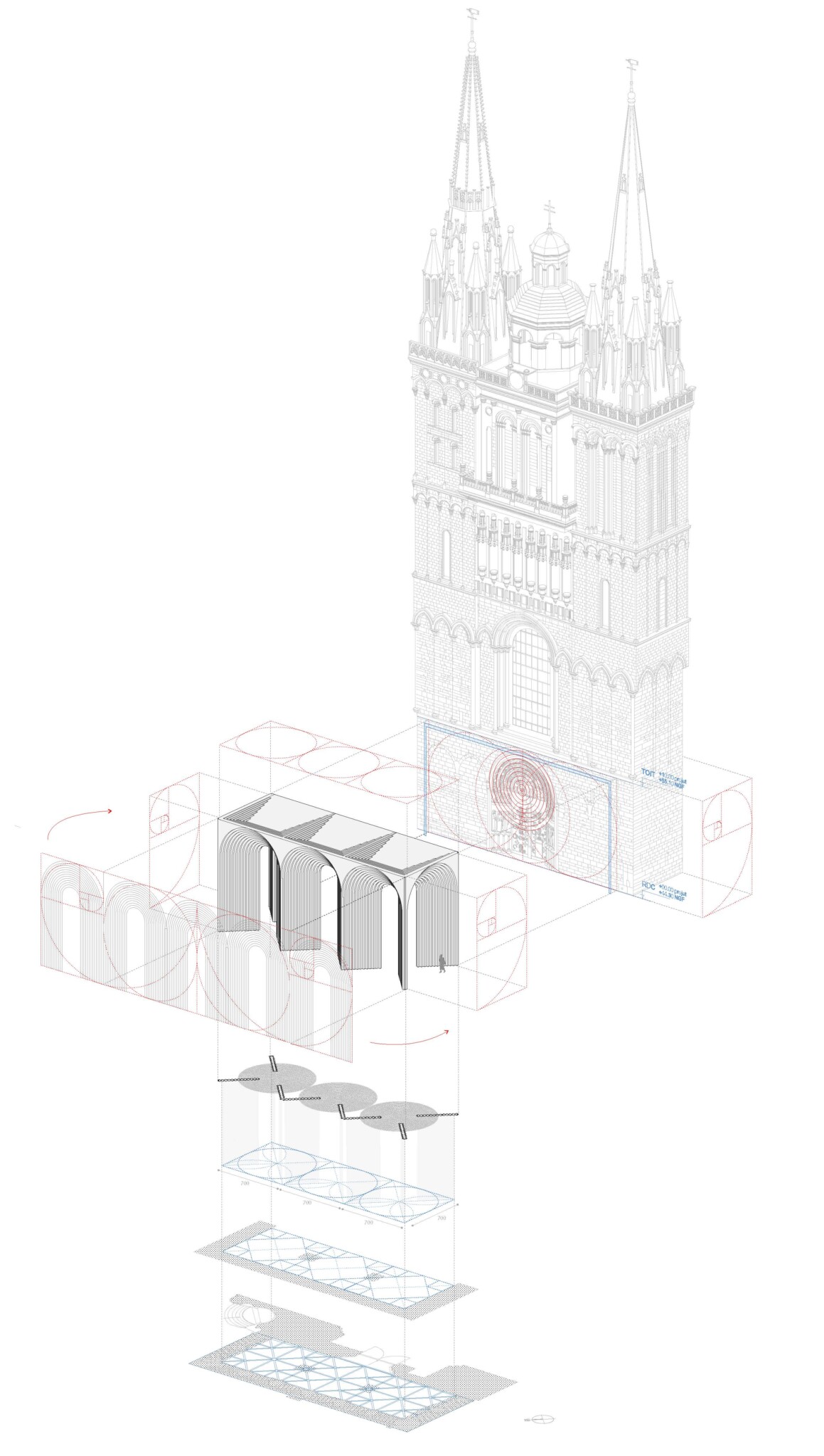
This “honest” galleria does not use a stone veneer. Instead, the precast concrete surface serves as the final finish. The original Romanesque façade was built by layering local limestone called tufa. The texture and color of our precast concrete, made from gravel and sand from the Loire River flowing through the region, harmonize beautifully with the Romanesque tufa. The Loire River, which created and nurtured the beautiful city of Angers, perfectly connected the Romanesque past with the present.
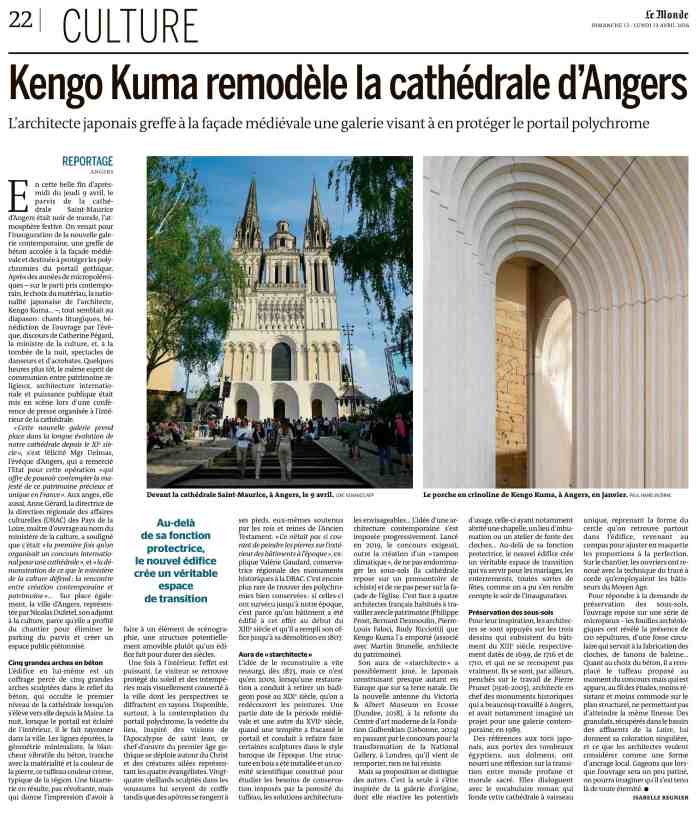
I learned once again that conservation is not an act of merely protecting, but an act of connecting. The newspaper Le Monde concluded its article on this project with a beautiful sentence stating that let us bet that when this building acquires a unique patina over time, we can imagine that it has stood there since the beginning of eternity. The “eternity” felt then is exactly what we kept searching for here.

ProjectsThe Gallery Of Saint Maurice Cathedral in Angers
 We were asked to design a contemporary gallery to protect the western portal of Angers Cathedral, where precious polychromatic sculptures from medieval (12th century) and modern (17th century) periods were recently discovered. The uniqueness of this portal, dating from the 12th century, is represent … Read More
NewsKengo Kuma Documentary Film “particle dance” Kyoto Screening Announcement
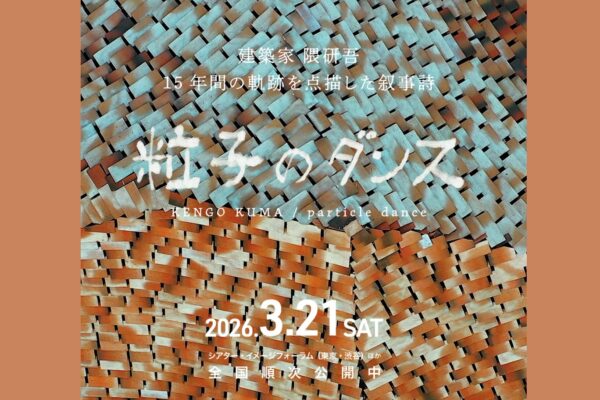 From 29 May to 11 June, the film Dance of Particles will be screened at UPLINK Kyoto, the cinema located on the B1 floor of ShinPuhKan in Karasuma Oike, Kyoto. For further details, please visit the UPLINK Kyoto website. Nationwide release to follow. Screening schedules vary by venue. For the latest … Read More
NewsExhibitionGaudí: Windows on the Future
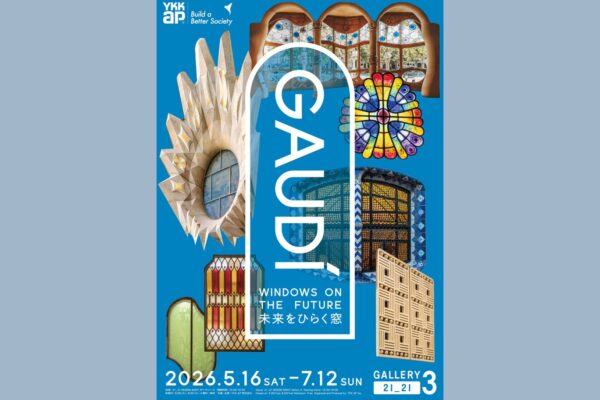 We are pleased to share that Gaudí: Windows on the Future, an exhibition organized by YKK AP to commemorate the 100th anniversary of Antoni Gaudí’s passing, is currently being held. At the exhibition venue, part of an interview video with Kengo Kuma is also screened. [Exhibition Details] Dates: Satu … Read More