
#73 October 11, 2025
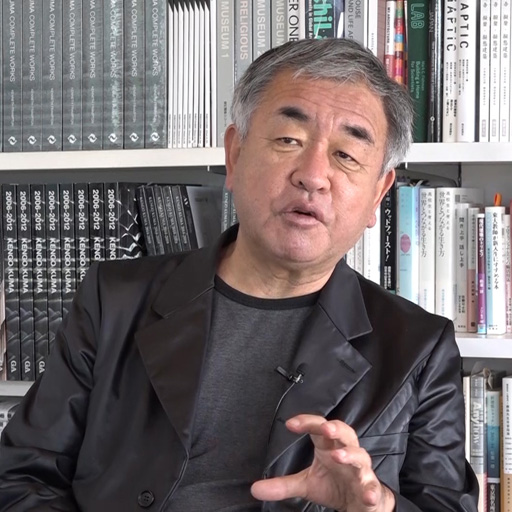
I was invited to an exhibition featuring the German architect Frei Otto (1925-2015) and myself entitled “Beyond Geometry. Frei Otto x Kengo Kuma” in the city of Chemnitz, which gave me the opportunity to reflect upon the commonalities and differences of myself and an architect whom I respect.
The EU has an interesting event called the “European Capitals of Culture” in which it annually promotes the local culture of the designated city. For some reason, the industrial city of Chemnitz was selected as one of these capitals although it is not colorful or showy, and an old factory and other structures there were selected as the venue for various plans that have been made, with the Otto x Kuma exhibition designated as one of the main attractions.
Even today, I still clearly remember the shock that the membrane structure of the roof on the stadium for the 1972 Munich Olympics, gave me at the age of 18 when I was just beginning to study architecture. This was one of the most important pieces of work by Frei Otto, who was born in Chemnitz-Siegmar.
Kenzo Tange’s Yoyogi National Gymnasium for the 1964 Tokyo Olympics was the trigger for my desire to become an architect, but during my high school years, I started to question the very presence of architecture, as the massive expressions of concrete structures by Tange and Kurokawa seemed to symbolize the era of rapid economic growth and environmental destruction. I also became unsure about making architecture my life’s work. Then I encountered the light and irregular membrane structure of Frei Otto that looks like an amoeba, and it felt like a ray of hope was shining again.
Naturally, I could never have dreamed that I would be part of an exhibition with him, whom I had been admiring, half a century after this encounter in 1972. The fact that the curator in Germany listed “transparency”, “nature” and some other points that I had in common with Frei Otto from various perspectives made me very happy, and it felt like something that is more than I deserve.
In particular, the thing that moved me the most in my talk with Christine, Frei Otto’s daughter, was the episode that she described in which he continued to use the workshop style to teach young people and students about his challenge of using new materials and construction methods until the end of his life. I strongly feel that I want to and must continue to talk to young people with his level of humility and perseverance.
The other episode that was very impressive was his realization that buildings are very weak and transitory after seeing cities that were completely destroyed and shattered into millions of pieces after undergoing military pilot training before the end of the war. He was conscripted as a pilot since he had glider experience. In contrast, I did not see cities from the sky, but walked around shattered cities after earthquakes and other disasters. Even if they were not pilots during the war, Japanese people have the opportunity to see many such sights. Therefore, I think that he and I had the same sense of impermanence at the bottom of our hearts, and this directed us towards transitory, slim architecture. The notion of impermanence allows humans to appreciate the beauty of transience.

NewsExhibition – Beyond Geometry – Frei Otto x Kengo Kuma –
 Exhibition - Beyond Geometry - Frei Otto x Kengo Kuma - Term:April 03, 2025 - June 29, 2025 Venue:Kunstsammlungen am Theaterplatz, Chemnitz Please click here for details. Read More
ProjectsChemnitz Exhibition
 In Chemnitz, Germany, birthplace of architect Frei Otto and selected as European Capital of Culture 2025, we held a joint exhibition with him. Known for his emphasis on symbiosis with nature and regionalism, as well as his soft-formed membrane structures, Frei Otto's architectural philosophy resonat … Read More