
#76 January 6, 2026
Back to Village, Back to East
After I gave a lecture in April last year at Columbia University that was being confronted with problems involving the Trump administration, I saw Henry Smith, a leading historian of modern and early modern Japan, and promised to get together again in Tokyo.
This time, he came to Japan to attend a number of events celebrating the 50th anniversary of a legendary exhibition entitled “Shinjuku: The Phenomenal City” (1975 – 76) at the MoMA that he played a central role in planning. Having one person give a talk to celebrate the 50th anniversary of an exhibition that he planned is a surprising testament to the energy he continues to have.
Since he said that he wanted to talk over drinks about Shin Mura-ron Tokyo, that I co-published in 2011, before his talk, we got together late at night before I left for Ecuador.
I think that the Shinjuku Exhibition that he planned together with Koji Taki was the most important architecture-related exhibition that has been held at MoMA. Naturally, the “Modern Architecture: International Exhibition” that was held in 1932 was a memorable one since it created the opportunity for modernist architecture to dominate the world, but I think that the Shinjuku Exhibition which was held about half a century later was a prophetic exhibition that signified the demise of modernist architecture from a certain perspective, or when examined further, pronounced the “Demise of Western Architecture.” Similarly, the Shinjuku Exhibition was much more of a revelation than the “Deconstructivist Architecture” exhibition held at the MoMA in 1988, recognizing the essence of that point in time. Henry and Taki sensed the defeat of Western “Great Civilization” within the hustle and bustle of Shinjuku, where small things and subtle noises took center stage, and consequently found hope in the “Small Civilization” of Tokyo. While the “Deconstructivist Architecture” exhibition featured novel forms, it remained merely a display of “new styles” centered on the West. The Shinjuku Exhibition, in contrast, embodied a critique of the very concept of architecture and, furthermore, can be viewed as a reaction against Eurocentrism.
Since I started to study architecture in that same year of 1975 when that memorable exhibition was held, I could be called one of the babies to which the Shinjuku Exhibition gave birth. It is not a coincidence that this baby published a book entitled Shin Mura-ron Tokyo that criticizes Western “Great Civilization” about half a century later. Henry and I talked about a project to revitalize Mura (villages) that I have been working on with Satoko Shinohara in Kagurazaka on the outskirts of Shinjuku, while enjoying natural wine.
The amazing thing about Henry is the fact that he has a historical perspective on what Mura (villages) represent that transcends a mere sensory or personal interest in them. A good example of this is his essay entitled “Tokyo as a Village: The Changing Image of the Modern Japanese Capital” contained in the book, Series on the History of Urban Architecture Vol.6: A Mature Urban Culture (2006) compiled by Professor Hiroyuki Suzuki, who was one of my mentors at the university. In this essay, he gave many examples of “capital cities around the world” which have the experience of being called a village, positioning Tokyo in the world in a relativistic manner. For example, Moscow in the latter half of the 19th century was called a “village” for a large number of industrial workers who had strong connections to rural areas. In the 20th century, Los Angeles was called an “enormous village” due to its vast sprawl and the dispersal of the city into suburban enclaves (A Mature Urban Culture, p.203).
The conclusion that Henry reached as a result of his extensive research is that Tokyo, more than anywhere else in the world, still retains the essential characteristics of a Mura.
The night that I spent talking with him in Kagurazaka, situated at the very heart of that Mura, remains an unforgettable one.

NewsPublication / Book Talk Event “Kaware! Tokyo” Korean edition
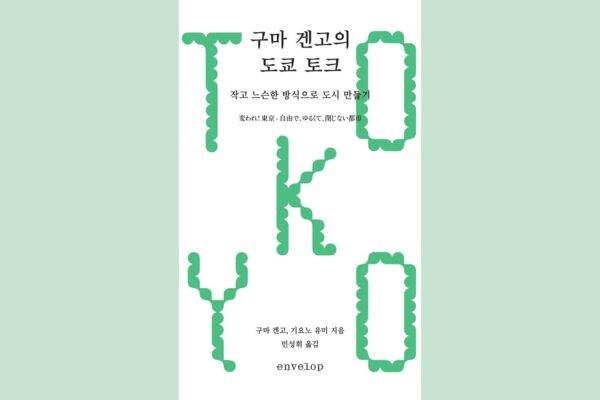 We are pleased to announce that the Korean edition of “Kaware! Tokyo”, titled “구마 겐고의 도쿄 토크-작고 느슨한 방식으로 도시 만들기”, has been published by envelop. For more details and purchase information, please visit here. 【Book Launch Event】 Date: December 8, 2025 (Mon), 19:00–21:00 Part 1 (19:00–19:30) – Book summ … Read More
NewsPublication“Kagurazaka ‘Wakana’”
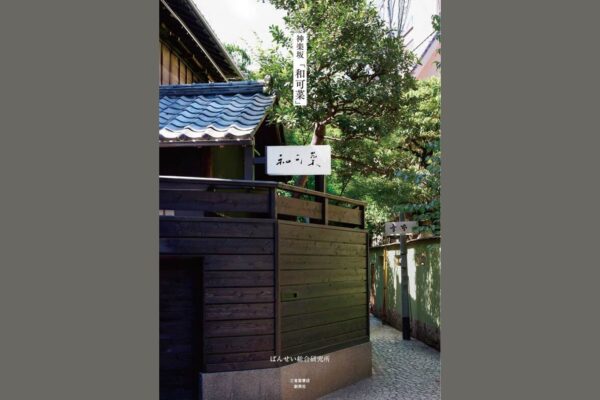 We are pleased to announce that Kagurazaka ‘Wakana’, authored by the Bansei Research Institute, has been published by Sanseido Shoten. Reflecting on the fading legacy of “Wakana” — Yoji Yamada Leading the regeneration — Kengo Kuma Infusing life — Toshio Ohi For more details, please visit here. I was … Read More
ProjectsKagurazaka Wakana Renovation
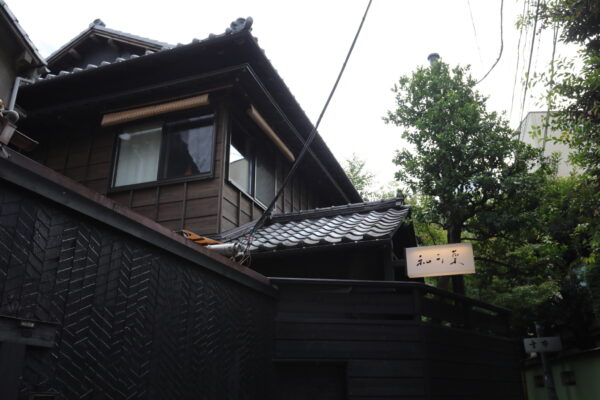 This project consisted of the renovation of a symbolic Japanese Inn in Kagurazaka which has been called the “Writer’s Inn” due to the fact that it was used by the film director Yoji Yamada and many authors to do their writing. The Wakana Inn, which opened in 1954 with an investment by the actress Mi … Read More