
#82 April 9, 2026
Neo-Metabolism Declaration
I declared a neo-metabolism at a keynote speech at the opening of “The Legacy of World EXPOs” exhibition held at The Museum of Modern Art, Wakayama, which was designed by Kisho Kurokawa, who both nurtured me and with whom I engaged in various battles. Neo-Metabolism refers to my respect and criticism of the Metabolism movement boldly advocated by Kisho Kurokawa, Fumihiko Maki and Kiyonori Kikutake in the 1960s, which had created an uproar in the world of architecture at the 1970 World Expo.
As a matter of fact, this phrase is not something that I came up with just yesterday or today, but was first voiced by the biologist Shinichi Fukuoka during our conversation 16 years ago, which first appeared in NA Architects Series 02: Kengo Kuma.
During this conversation, I talked about my experience at the 1970 Osaka World Expo. As a precocious student in my first year of high school, who admired architects—and in particular, idolized the Metabolist ideology of Kisho Kurokawa that proclaimed, “Learn from biology” and “Learn from Asia”—I visited Osaka in the scorching heat of summer to experience actual Metabolist architecture.
However, a huge disappointment was waiting for me there. Rather than the “capsules flexibly metabolizing like an organism” proposed by the Metabolism movement, it felt like a giant metal monster (photo), representing a brutal mega-machine of industrial society that was the polar opposite of the “biology” and “Asia” advocated by Kurokawa. Having lost the hero that I admired, I was devastated and left the Expo grounds feeling utterly exhausted.
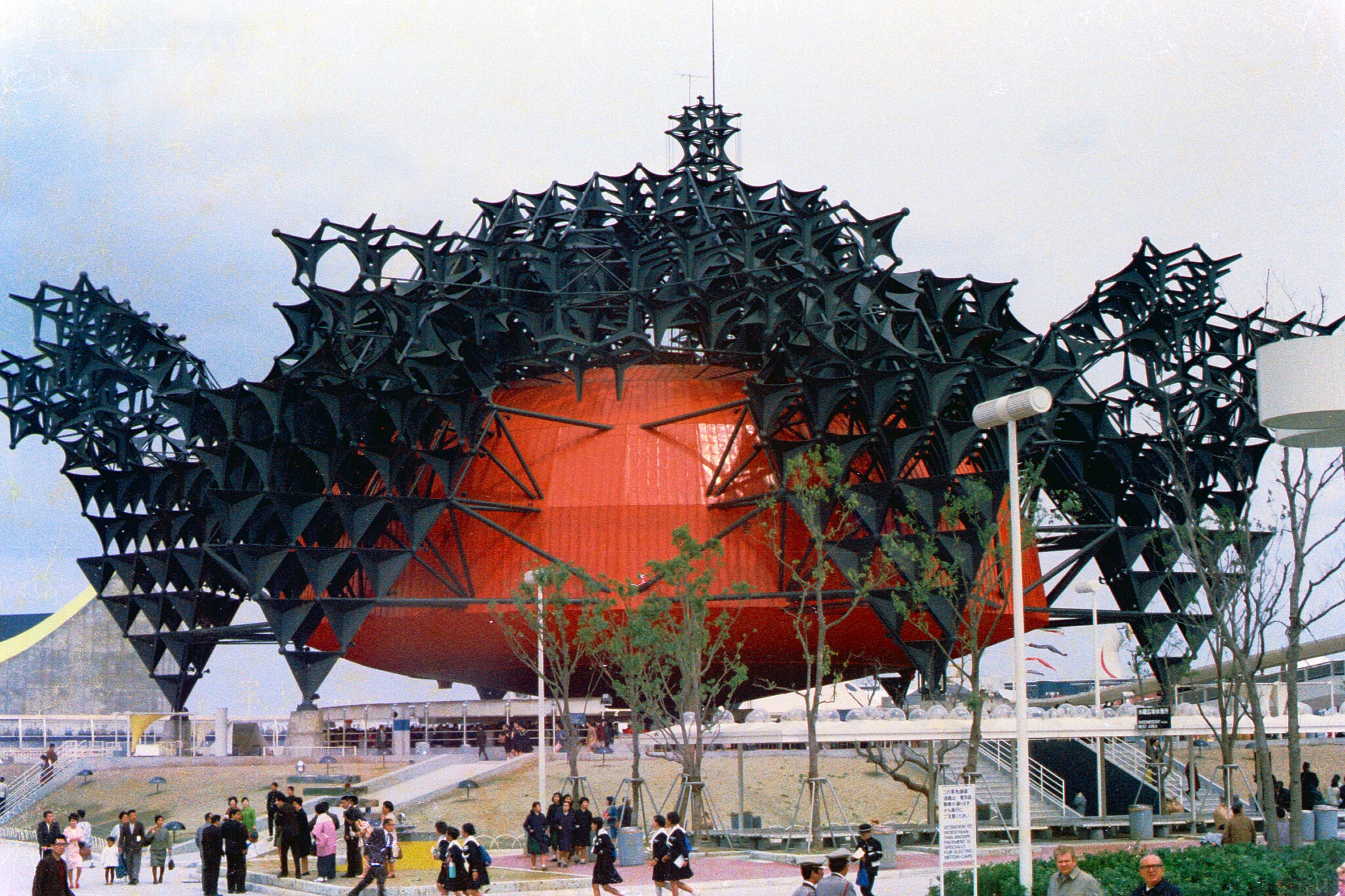 Kisho Kurokawa, Expo’70 Toshiba IHI Pavilion (© takato marui)

In a sense, my intuition at that time was correct. Far from possessing the suppleness of a living organism, the steel capsules (housing units) of the Nakagin Capsule Tower (1972) were never replaced during the life of the building, until the building was finally demolished in 2022. Not a single one of Kurokawa’s capsules was ever successfully replaced; none of them actually metabolized.
Why did this happen? Shinichi Fukuoka, who argues that the essence of life lies in its "flow" in his book Dynamic Equilibrium, says that “The capsules were too large.” Due to the fact that replacing Kurokawa’s capsules would be virtually the same as an “organ transplant,” it bore little resemblance to the metabolic processes occurring in organisms on a daily basis. In comparing my architecture—a collection of small particles—with that of Kurokawa, Fukuoka stated that my work is much closer to the actual state of biological metabolism. I felt greatly encouraged by his comment and was able to gain confidence in my direction.
Even more interesting is his point that there is a difference between the views of biology in the 20th and 21st centuries. From the early modern period of Europe until the first half of the 20th century, organisms were thought to be a collection of organs. The body was seen as a combination of organs—bones, heart, lungs, and stomach—viewed as functional components (such as gears and axles), which could be paraphrased as mechanism or a mechanistic view.
In contrast, from the latter half of the 20th century, organisms were defined by an equilibrium and the flow of small particles and various fluids represented by cells. Shinichi Fukuoka made the judgment that Kengo Kuma’s small particle architecture was inspired by this new view of biology.
I do not know whether or not this small particle architecture will actually achieve a supple metabolism in the future. However, one reference point for this is traditional Japanese wooden architecture, which is loosely assembled using small particles of thin wood. It is far superior to concrete construction in terms of facilitating changes to layout, renovation, and the replacement of deteriorated members, providing a high level of flexibility and suppleness. In a way, traditional wooden construction is one model of small particle architecture.
By learning from Japanese wooden structures and organisms, I hope that at some point in the future, I will be able to achieve the true Metabolist architecture that Kisho Kurokawa strived to attain. I attempted to put my wishes and innermost feelings into words for the first time at The Museum of Modern Art, Wakayama, which was designed by Kisho Kurokawa. It felt like this great mentor—who was passionate, intense, and enjoyable—was looking down from high above with a brilliant smile on his face.

NewsPublication “Ten, Sen, Men” Traditional Chinese edition
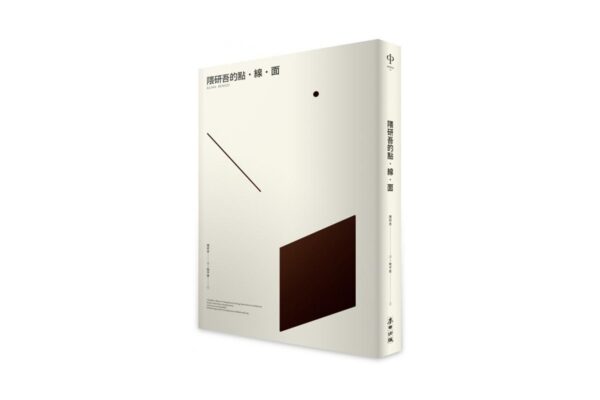 We are pleased to announce that the Traditional Chinese edition of “Ten, Sen, Men”, titled “隈研吾的點.線.面”, has been published by Rye Field Publication. For more details and to purchase, please visit here. Read More
NewsPublication “Nihon no Kenchiku” Korean edition
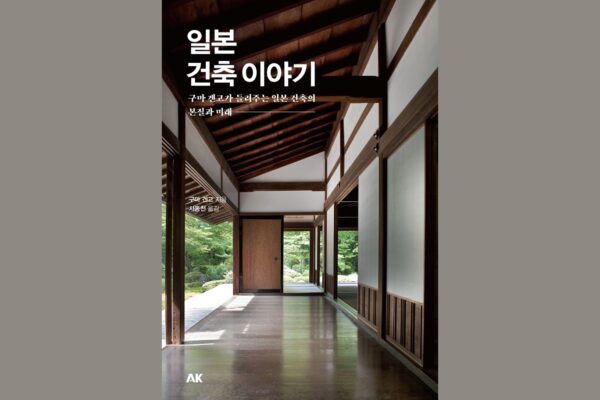 We are pleased to announce that the Korean edition of “Nihon no Kenchiku”, titled “일본 건축 이야기”, has been published by AK Communications. For more details and purchase information, please visit here. [Korean] 「Nihon no Kenchiku」를 한국어로 옮긴「일본 건축 이야기」가 AK커뮤니케이션즈에서 정식 출간되었습니다. 자세한 내용 및 구매 정보 Read More
ProjectsKayanoya Ginza
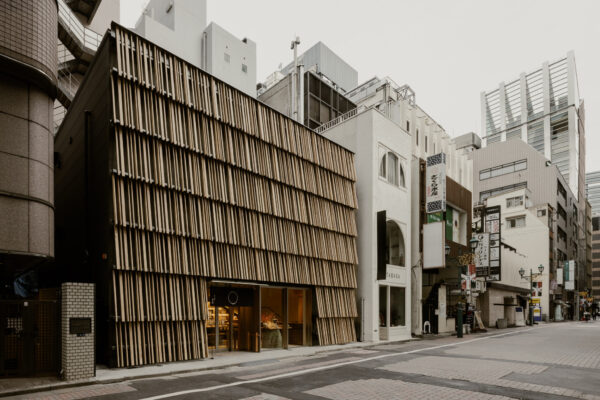 In Ginza—Tokyo’s vibrant district frequented by international visitors—we designed a shop using wood to create a space where visitors can experience Japan’s forests through all five senses. The façade, composed of slender wooden elements with subtly varying dimensions arranged three-dimensionally, o … Read More
ProjectsTHE RGE CLOUD
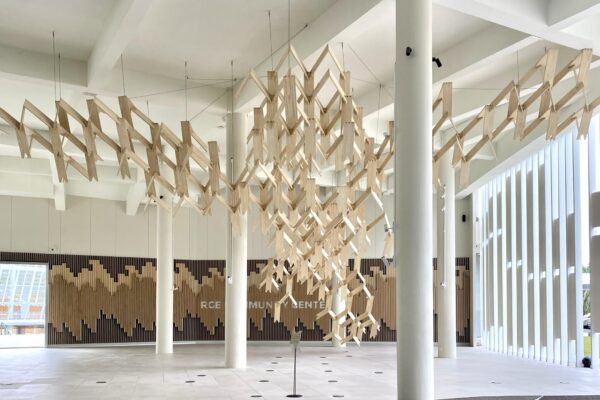 Conceived as a quiet yet powerful gesture toward the future hopes and collective dreams of the RGE Community Center, THE RGE CLOUD emerges from the spirit of togetherness rather than from form alone. The installation is realized through an abstract interpretation of the eagle’s feathers, translated … Read More