
#84 May 27, 2026
Architecture of Resonance by Bohdan Turok
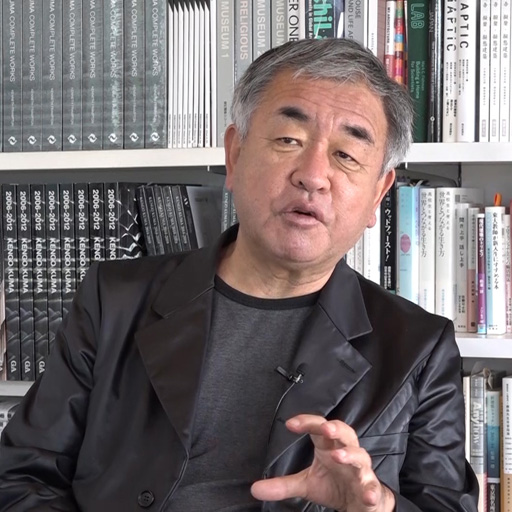
We held a sound event entitled “Architecture of Resonance” at Zuisho-ji Temple in Shirokane, which I designed, with Bohdan Turok, a friend of mine who is a filmmaker, composer and psychotherapist.
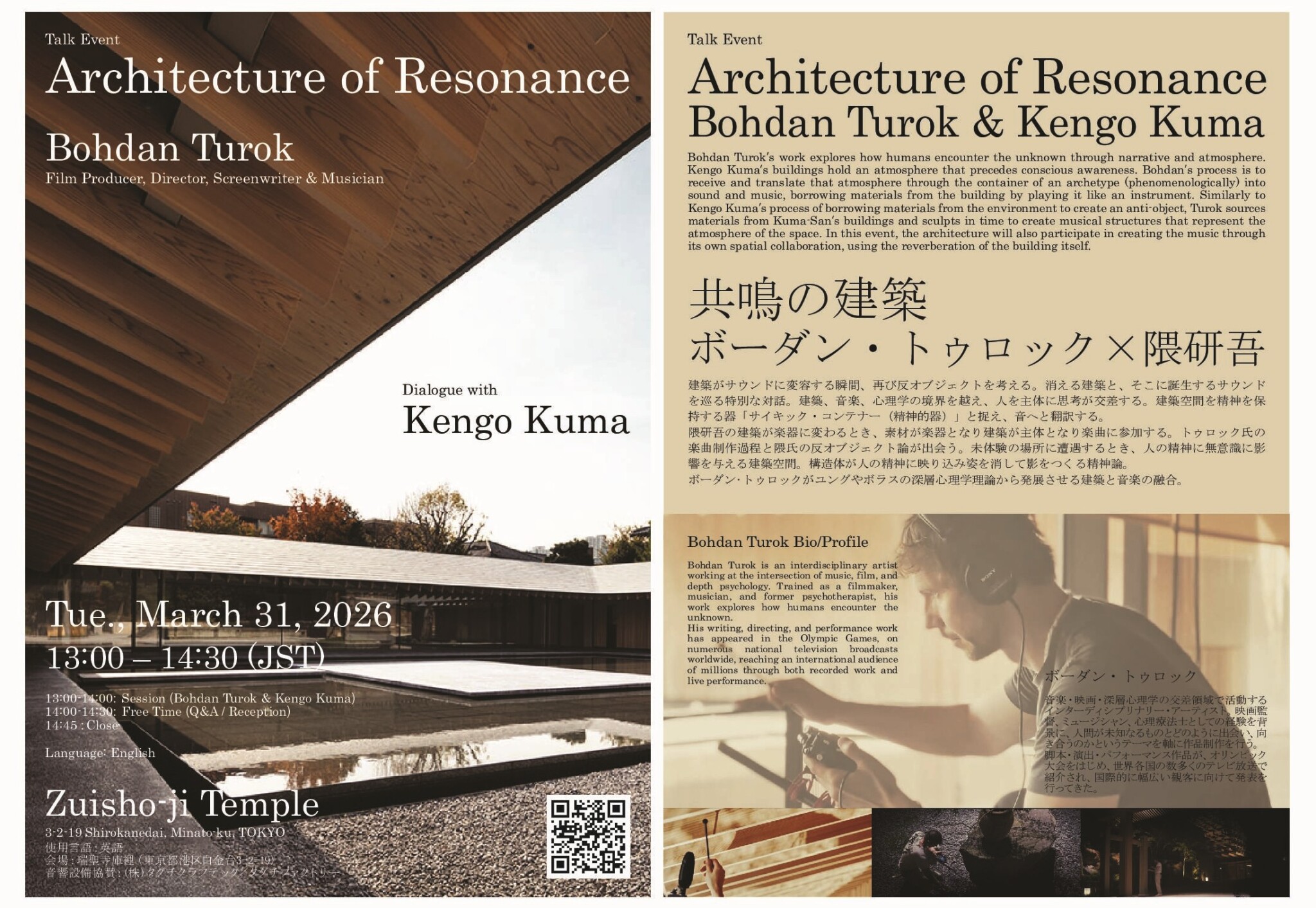
He creates a type of environmental music by rubbing and tapping the architecture itself, treating it as an instrument. This process causes the building, which was meant to be a material object, to lose its character as materials and be transformed into sound. This is close to my long-held desire to redefine architecture as sound rather than form, and he brilliantly accomplished this by transforming the respective characteristics of my buildings into distinct music. Seeing this process was very interesting. I planned the event at Zuisho-ji Temple based on a desire to listen to his music together with close friends, and discuss its meaning.
The most important thing that I gained from this lively discussion, which freely crossed the fields of music, architecture and psychology, was learning about the concept of “The Shadow of the Object” by the British psychoanalyst Christopher Bollas, who influenced him greatly.
I have consistently focused on creating architecture that merges into the environment since the bursting of the bubble at the beginning of the 1990s, based on the theme of "anti-object." I have also repeatedly stated that shadows are important in this architecture that merges into the environment. Le Corbusier attempted to use light to make architecture appear as a protruding object, but I have, on the contrary, used shadows in an attempt to erase architecture. The thesis that Japanese architecture is an architecture of shadows, proposed in the essay In Praise of Shadows by Junichiro Tanizaki, is deeply related to this.
The concept of “The Shadow of the Object” by Christopher Bollas provided a hint that bridges the two concepts of the object and the shadow on which I have focused, and it also gave me a significant hint with respect to the intimacy of space. Bollas analyzed how people feel a sense of intimacy toward space, and found that it involves a transformation process of objects dissolving into shadows.
The English psychoanalyst Donald Winnicott, who influenced Bollas, brilliantly analyzed the process of how children use "transitional objects" (stuffed toys, etc.) to achieve independence from their mothers and gradually connect with the real world. This concept of the transitional object became an important tool in psychoanalysis, and Bollas expanded upon this logic. He generalized the transition in which people feel intimacy toward a location and come to feel it is their own as a process in which the object acquires a shadow.
If the metaphor of the transition to shadows is used, it may be possible to conclude that creating designs with a soft presence which incorporate depth and shadows into architecture, in a manner similar to the infinite number of irregularities in the surface of stuffed toys, represents the essence of my technique. Transforming the harshness of the world into an intimate space by using a "stuffed toy conversion" process represents my basic approach to creating architecture. Bollas might summarize my architecture in this way.
Shae-Lynn Bourne, a world-famous figure skating choreographer and the wife of Bohdan Turok, was also present at the venue, and I truly wanted to discuss the "Japanese qualities" of her choreography with her. Shae-Lynn is also known for choreographing for Yuzuru Hanyu and guiding him to become a world champion, and the breathless intensity of the lessons between Hanyu and her was documented in detail in the NHK program "Choreographer of the Soul."
Why was she able to help make Yuzuru Hanyu the top figure skater in the world? I felt that the large support from Bohdan played a large role in making this possible. The foundation of the Russian-style choreography which gained a lot of popularity was, so to speak, object-oriented, focusing on how to pack as many objects of rotating jumps as possible into a limited amount of time. On the other hand, Shae-Lynn focuses on the value of the portions between the objects (rotating jumps), valuing the space between the jumps even more than the objects themselves. Introducing this holistic design into choreography has completely renewed the world of figure skating.
The criticism of the object-oriented Russian-style choreography focused on rotating jumps as placing an excessive load on the body of the skater, resulting in skaters burning out while they are still young, was in the background of this. Changes were implemented to the scoring methods in order to assign adequate evaluation points to the time between jumps and the overall flow, and this has resulted in the beginning of a shift in the overall flow of figure skating toward the choreography that focuses on the totality and spatiality of the performance.
The important thing in choreography that focuses on the totality of the performance is the resonance relationship between the choreography and the humanity of the skater as an individual. In order to create this resonance, Shae-Lynn focuses on the selection of the music. The type of music selected for the performance has a large impact on the overall impression. Bohdan was deeply involved with this selection of the music. He joins the dining sessions of Shae-Lynn and the skaters, and utilizes his experience in depth psychology and as a composer in order to help find music that best fits the deepest level of the skater.
I learned from Bohdan that it is important to dine together in order to get a feel for the deep level of a person, since the things that people write and say are only at the superficial layer. Shae-Lynn and Bohdan penetrate into the souls of the skaters through this process, and connect those souls to the people through their choreography.
I felt that the same type of flow is progressing in the fields of psychoanalysis, figure skating and architecture. This consists of a transition from objects to atmosphere, from shapes to shadows, and from the superficial layer to the soul. Bohdan’s methods, Shae-Lynn’s methods, and my own exist within this large overall flow. Sensing that a new type of affinity is born within it gave me a very peaceful feeling.

ProjectsZuisho-Ji Temple
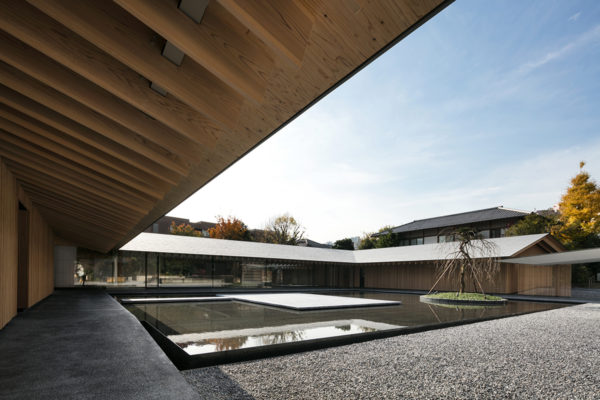 Zuisho-ji Temple (Minato-ku, Tokyo) is the first temple in Tokyo of the Obaku Sect, one of the Zen Buddhist schools brought to Japan by the Priest Ingen during the Edo Period. In this project, we rebuilt the priests’ quarters within the temple. Designated as jūyō bunkazai or Tangible Cultural Proper … Read More
ProjectsBanyan Tree Higashiyama Kyoto
 We designed the hotel as a sanctuary at the boundary between the forest and the city in Higashiyama, Kyoto. As if dissolving and disappearing into the forest, the Noh stage was created with a sense of “Yūgen” — a mysterious and subtle yet profound sense of beauty — by making it transparent out of lo … Read More
NewsKengo Kuma Documentary Film “particle dance” The film Dance of Particles won the Best Original Score Award at the International Sound & Film Music Festival in Croatia.
 We are pleased to announce that the film "Particle dance" was nominated in three major categories at the International Sound & Film Music Festival in Croatia, and won the Best Original Score Award in the Documentary category. For further details, please visit Read More