
#92 November 18, 2026
Black Crete
If I had to name the films that defined my youth, many people might be surprised by my answer. I would choose two Greek films: Zorba the Greek (1964) and Z (1969). Strictly speaking, Z was a French-Algerian co-production, but Greece was under a military dictatorship from 1967 to 1974, making it impossible to produce a film that openly criticized the regime within the country. Although the director, Costa-Gavras, was Greek, most of the filming had to take place in Algeria.
When I first encountered these two films, I was struggling with doubts about my future. Inspired by Kenzo Tange's Yoyogi National Gymnasium, built for the 1964 Tokyo Olympics, I had decided to become an architect. Yet soon afterward, pollution and environmental problems, symbolized by Minamata disease, came to the forefront. I was also disappointed by the government's and society's repressive response to those issues. This led me to question whether I should pursue a profession that, in one sense, could be seen as contributing to environmental destruction. At the same time, I began to doubt the postwar model of modernization through which Japan had followed the path of the West.
It was then that I was deeply moved by the landscapes marked by a certain poverty and dryness, and by the dark, powerful shadows portrayed in those Greek films. They seemed to offer a light that guided and sustained me during a period of uncertainty.
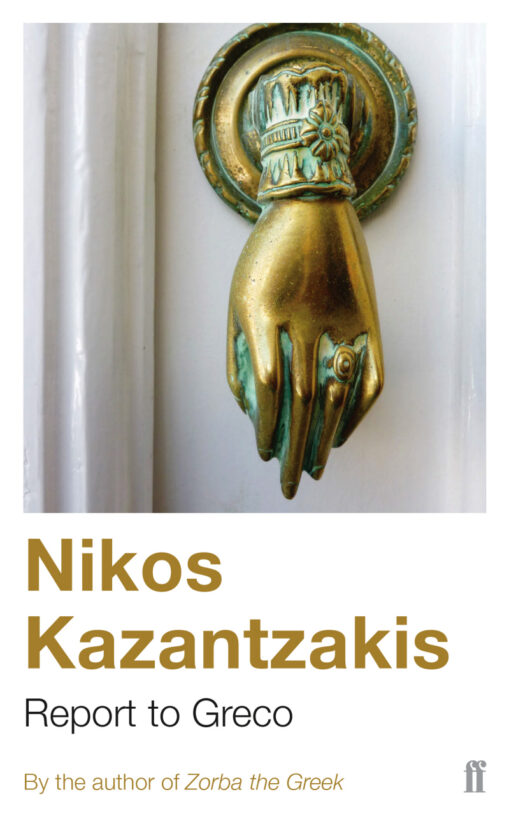
One reason I accepted a project in Greece was that I wanted, in some small way, to give something back to a country to which I felt indebted. After inspecting the construction site of a waterfront project in Athens, there was one place I felt compelled to visit: Crete. It was the birthplace of Nikos Kazantzakis (1883-1957), the author of Zorba the Greek.
There was also someone on Crete whom I very much wanted to meet. Elli, a former student of the Greek architectural photographer Erieta Attali, who has long documented my work, lives in Heraklion with her partner, George, where they run an architectural practice. Her great-grandmother was Kazantzakis's sister. Since Kazantzakis had no children, she is one of the few descendants who carries on his memory. At a restaurant overlooking the Venetian harbor of Chania, whose setting reminded me of Piazza San Marco, we spoke about a certain strength shared by Kazantzakis, Zorba, and the people of Crete.
Both the island of Crete as portrayed by Kazantzakis and the figure of Zorba himself possessed an intense darkness unlike anything I had encountered in either Hollywood or Japanese films. The Cretans have long been known as formidable fighters. Yet their strength was not the direct, head-on force of Spartan heavy infantry. It was a strength shaped by Crete's rugged terrain and forests: agile, observant, quick, resilient, and enduring.
Those forests and landscapes also made ancient Crete an important source of timber for Egypt. Later, because of its strategic location in the Mediterranean, the island was repeatedly conquered by powers including Islamic rulers, Venice, and Catalonia. Yet the people of Crete never truly yielded. Their devotion to family and community allowed them to endure. The black clothing many Cretans still wear today symbolizes that solidarity and strength of spirit, qualities that Kazantzakis expressed through the character of Zorba.
Zorba's ability to remain cheerful in the face of any hardship or defeat gave hope to my own uncertain and troubled youth. Elli proudly explained the meaning of the inscription on Kazantzakis's grave in Crete: “I hope for nothing. I fear nothing. I am free.”
Before we parted, Elli gave me a gift: a string of black beads made from volcanic stone, the kind that Cretans often carry in their hands. Black suits Crete perfectly. It even made me feel that my own preference for wearing black might, unconsciously, reflect the influence of the Cretan spirit on my own.
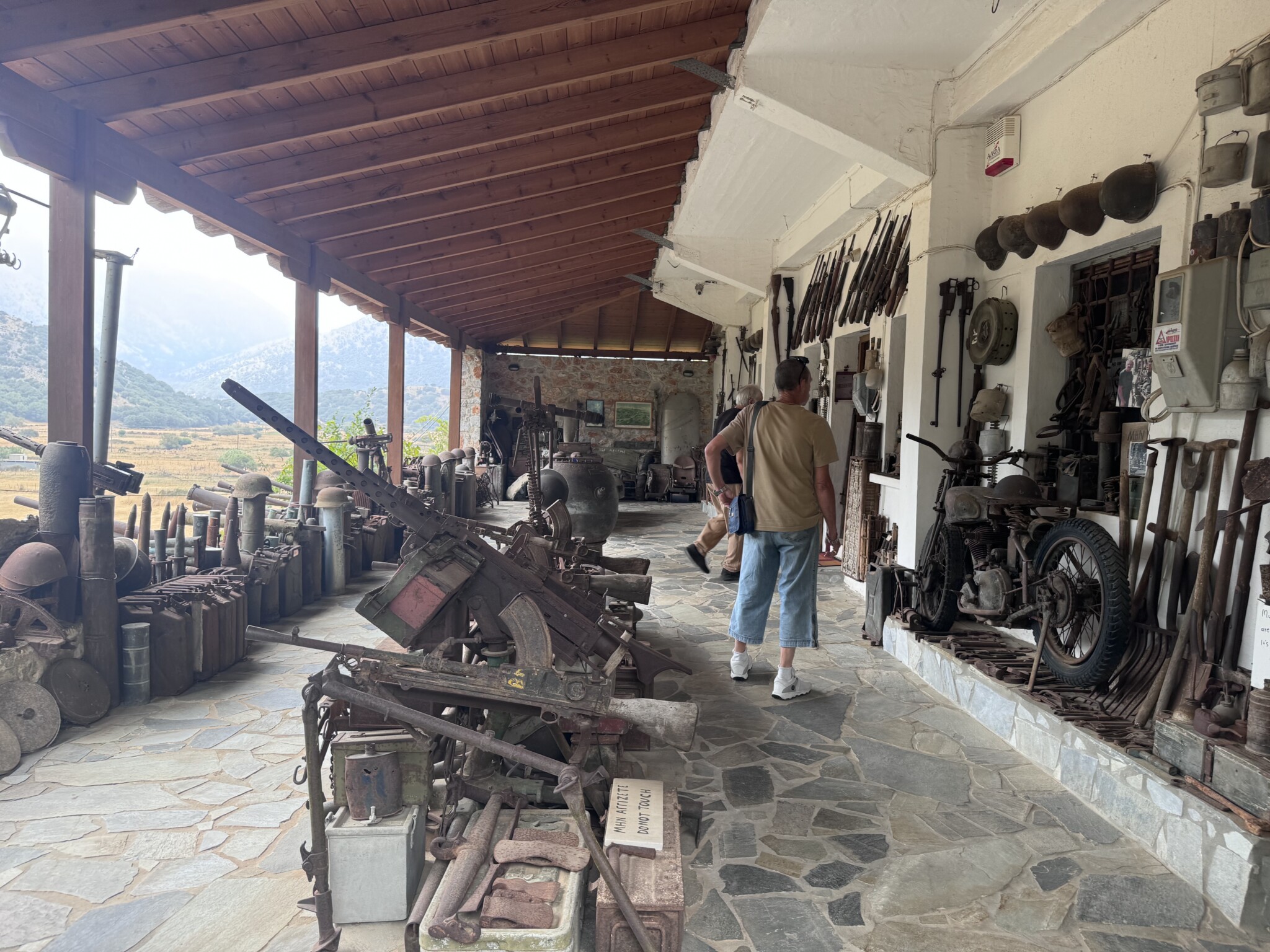
Carrying the black beads with me, I then visited a small museum in the mountains called the War Museum Askifou. Almost instantly, the bright sunlight of the coast disappeared, and a white mist enveloped the landscape. It was then that I realized that Crete is not only an island of the sea, but also an island of mountains and forests. The museum clung to a steep hillside. Far beyond any conventional idea of a museum, its old stone buildings, sheds, and garden were filled with an astonishing number of rusted weapons and military uniforms. It was an extraordinary place, with an almost timeless atmosphere.
Countless wars have been fought on Crete since ancient times. The war documented here was, however, the struggle against Nazi Germany during World War II, when the island became a strategic target because of its position in the Mediterranean and its importance in Germany's attempt to secure access to Middle Eastern oil. Looking at the overwhelming number of weapons and military artifacts on display, I was struck by the reality that this seemingly peaceful island had witnessed so many battles and so much death.
By the time I returned to the coast, evening was approaching. I visited a memorial dedicated to the composer Mikis Theodorakis (1925-2021), who wrote the music for both Zorba the Greek and Z. Whenever I think of scenes from those films, Theodorakis's music, deeply connected to the folk traditions of Crete, begins to play in my mind. Just as Kazantzakis was deeply rooted in Crete, so too was Theodorakis. I felt that an important part of my youth was tied to this island. More precisely, it was through encountering figures such as Kazantzakis and Theodorakis at a crucial stage of my youth that an important part of who I am today was formed. Visiting Crete itself for the first time allowed me to recall, with remarkable clarity, the significance of those encounters.

NewsPublicationKengo Kuma on “The Book of Tea”
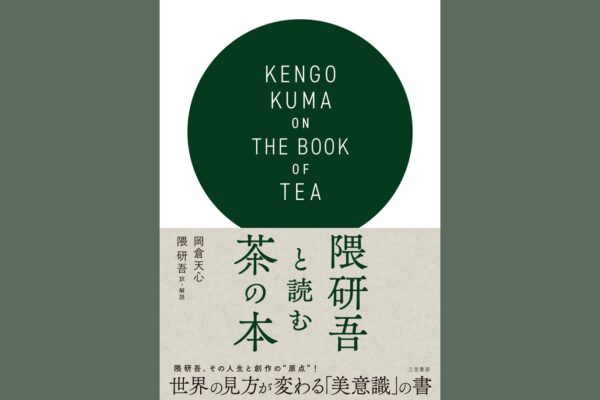 We are pleased to announce the publication of Kengo Kuma on "The Book of Tea" by Mikasa Shobo, written by Tenshin Okakura with modern Japanese translation and commentary by Kengo Kuma. For more information, please visit here. I was asked to prepare a new Japanese translation of The Book of Tea by Te … Read More
ProjectsEllinikon Riviera Galleria
 The vision of an open and sunny Athenian Riviera, with an outlook towards the sea, calls for an architecture that is extroverted and in continuation with the landscape. We have evolved the typology of the Galleria into a unique, open and connected architecture. Through simple, rational planning, we … Read More