
#58 June 3, 2024
I visited Gaudi’s :Casa Batlló (1877) again. I was asked to create an interior for the stairs which were not designed by Gaudi, and took hints from deep sea caves and the organisms that live there, and used aluminum chain to express those aspects and geometry (completed in 2021). On that day, many visitors were using our steps that lead to the museum shop from the space designed by Gaudi, and I saw that they are functioning as a type of time tunnel outside the hustle and bustle of other spaces at a level that surpassed what I imagined.
After that, Jordi Faulí, who is the directing architect of the Expiatory Temple of the Sagrada Familia, showed me every corner of the basilica which is nearing completion. I was very surprised at the dramatic change in the impression that I got when I last visited 20 years ago. Rather than surprised, more accurately, it felt like my feet trembled.
In a nutshell, the space was gloriously light, and although it may sound like a cliché, it felt like I was really in heaven. The last time I was there, the Sagrada Familia did not have a roof, and the vertical walls and pillars felt heavy and old. In stark contrast, the radiant ceiling is insanely high, and appears to be floating in the air as if gravity has lost its affect on it. The light that enters the space through the stained glass plays the leading role, which may be due to the fact the color and the size of the glass has been exquisitely calculated according to the direction. Since light and color truly play the leading roles, the materials are the supporting cast.
The fact that Gaudi wanted to achieve a non-material world is clear from the statements that he left, but when I stood in this place, I felt the meaning of these words with my body, and it made me shiver.
It is known that Gaudi repeated various structural and mathematical experiments in order to acquire that non-material state, starting with his famous upside-down physical models, but the compounding of bipolar parabola, shells, pillars that consist of branches that lean against one another and other solutions have superbly materialized transparency and lightness in the space. This has resulted in stunning contemporary architecture that is undoubtedly a miracle.
Naturally, Gaudi was not able to design all of the details of this unbelievably difficult process while he was alive, nor was he able to control the process. Looking at the situation from another perspective, the Sagrada Familia will be completed as contemporary architecture because of the culmination of many ideas and the latest technology in accordance with Gaudi’s principles. Cubism sculpture is included in the Passion Façade by Subirachs who criticized Gaudi’s principles for a certain amount of time, but all of the elements, including those which appear to be noise, harmoniously reverberate in this completed transparent space.
This was something which was completely unexpected. This mysterious, peaceful, forgiving space envelopes you in a manner that wipes out the concept of noise itself, and I was convinced that I had witnessed the essence of his “belief” which was definitely a “world” that Gaudi saw in a dream.

ProjectsWorld Heritage and Pyrenees National Park House in Gavarnie
 Welcoming all the public and the inhabitants of the Pays Toy is the leitmotiv of the World Heritage House and the Pyrenees National Park in Gavarnie. As the heritage of tomorrow, it is part of its territory and landscape, in tune with the elements: water, sun, wind. The house accompanies and serves … Read More
ProjectsJuju
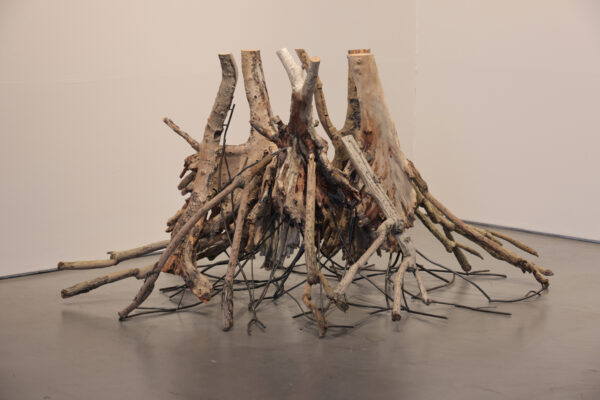 For this project, we were asked to design a series of chairs. Our concept was to represent the rich diversity of Japanese culture by selecting five different regions and pairing them with specific timber species native to that area. Tokyo (Cedar), Mt. Fuji (Karamatsu), Karuizawa (White Birch), Kyoto … Read More
ProjectsKibi Kogen N Square
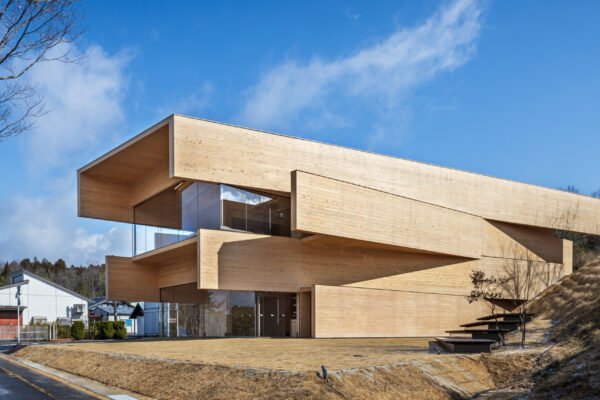 A regional exchange and creative facility centering on coworking and a café in Kibichuo, a town located on the plateau in the center of Okayama Prefecture. A local company Systems Nakashima took the initiative of developing the project. CLT panels, of which Okayama is the largest producer in Japan w … Read More