
#49 July 13, 2022
Politics of Defeat
I received an offer from Masayuki Tatsuzawa, City News Editor of the Asahi Shinbun, to talk about the politics of Japan. I was quite hesitant since this is a topic which I am not accustomed to talking about, but sat down and attempted to give my views on politics for the first time.
Masayuki Tatsuzawa has an unusual career, graduating from the Department of Architecture in the Faculty of Engineering at Kyoto University, and has read a number of my books, including “Architecture of Defeat” and “Juttaku-ron”, and thought that talking with me may provide a hint to transcending the closed status of contemporary politics.
When he pointed this out, I stated that I think it is necessary for both current architects and politicians to “lose in a concrete manner” rather than a “defeat” that is abstract. I am using the term “defeat” or “lose” to show respect for the other person or the location. To utter “respect” where there is not another person is preachy as if you should be “defeated”, and often involves different kinds of errors and egocentrism. Designing a piece of architecture consists of dealing with various other people (e.g. neighboring residents, users and craftspeople who do the construction), and means that you “lose” to those people (accept their wishes). The “Architecture of Defeat” and “Politics of Defeat” represent the accumulation of these various types of concrete “defeats”, and the stating of “defeat” in a condescending and abstract manner rather goes against the original intent of the concept of “defeat”.
I stated these thoughts while attempting to exercise self-discipline. Please read the article for further details.

ProjectsPadova Congress Centre
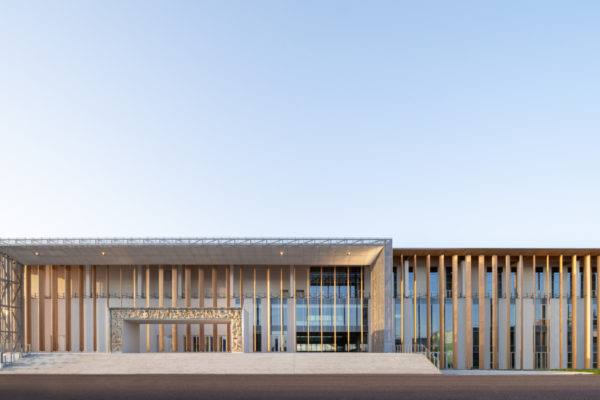 This project is the new replacing of the Palazzo delle Nazioni (1951), in the Congress Centre located in the historic Padua Fairs (Fiera di Padova). The front gate, which uses reliefs preserved from the old Palazzo delle Nazioni, emphasizes the central axis that passes through the convention center. … Read More
ProjectsThe Cloud
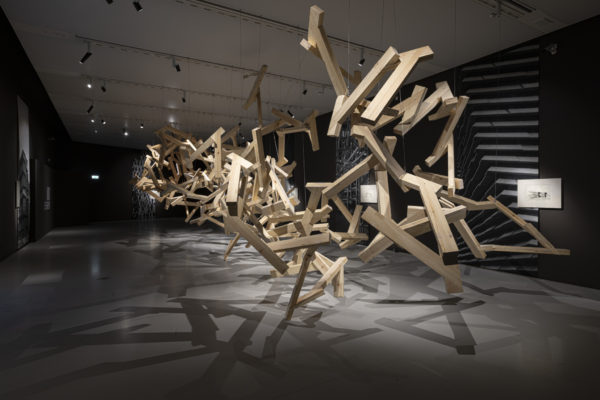 The design of the "Cloud" pavilion is inspired by the Polish and Japanese tradition of wooden architecture. The pavilion is designed on the basis of an individual interpretation of traditional carpentry connections. The project is inspired by analysis of slanted locks and dovetail joints connections … Read More
ProjectsJugetsudo Tsukiji
 We designed a space that embodies the spirit of “Chazen” (concept that Way of Tea and Zen are the same) inspired by bamboo “Nodate” umbrellas. “Nodate” (outdoor tea ceremony), which is said to originate from Sen-no-Rikyu, emphasizes hospitality towards guests over proper etiquette. This resonates wi … Read More