Kengo Kuma : Onomatopoeia Architecture at Bonn
Following its success in Italy, the “Onomatopoeia Architecture” exhibition traveled to the Bundeskunsthalle (Art and Exhibition Hall of the Federal Republic of Germany) in Bonn. The Bundeskunsthalle was designed by Austrian architect Gustav Peichl. Peichl’s work is characterized by the integration of “symbolic forms” while strictly adhering to the rules of Modernism—making it a perfect architectural counterpoint to our “Onomatopoeia Architecture.”
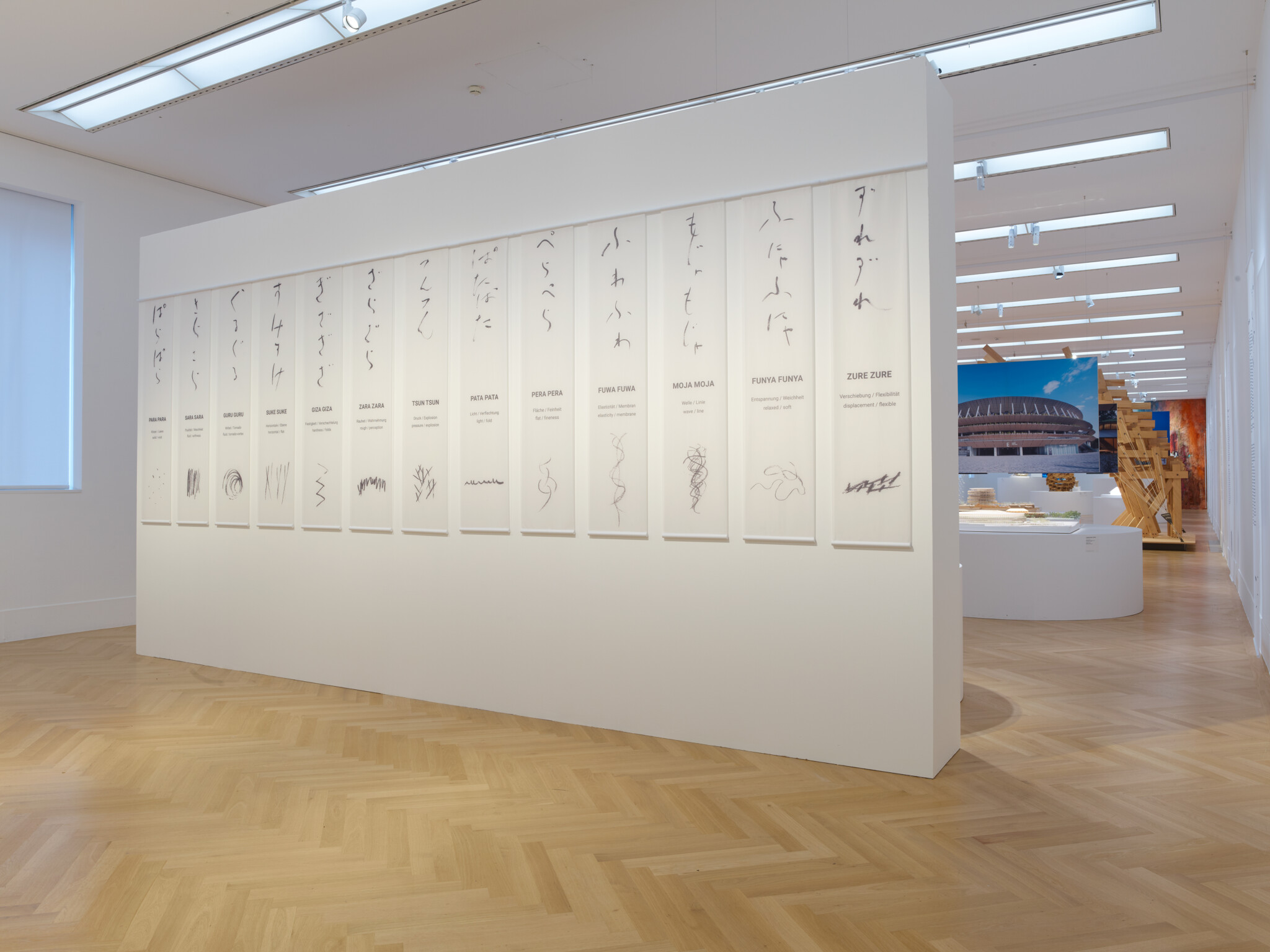
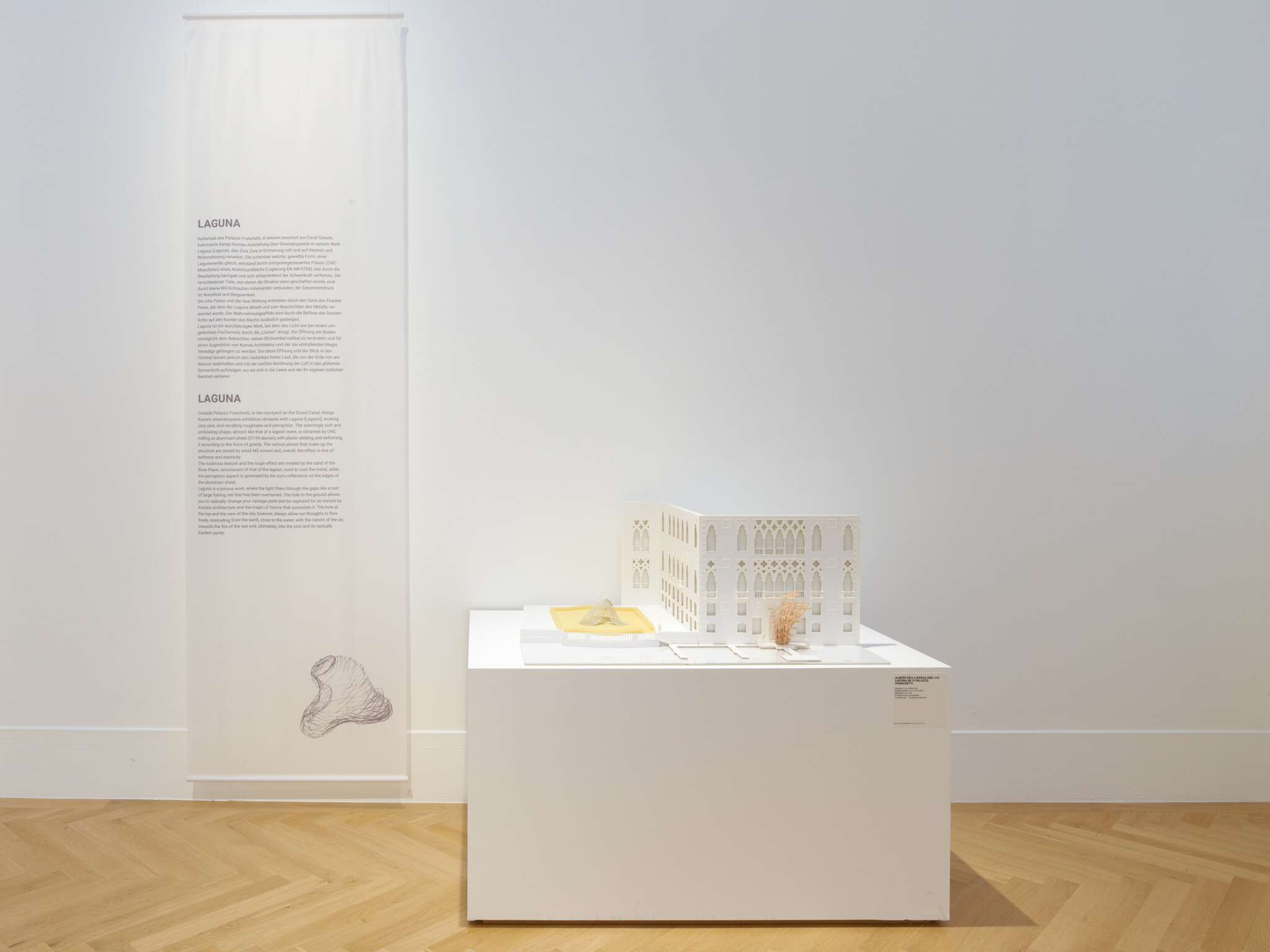
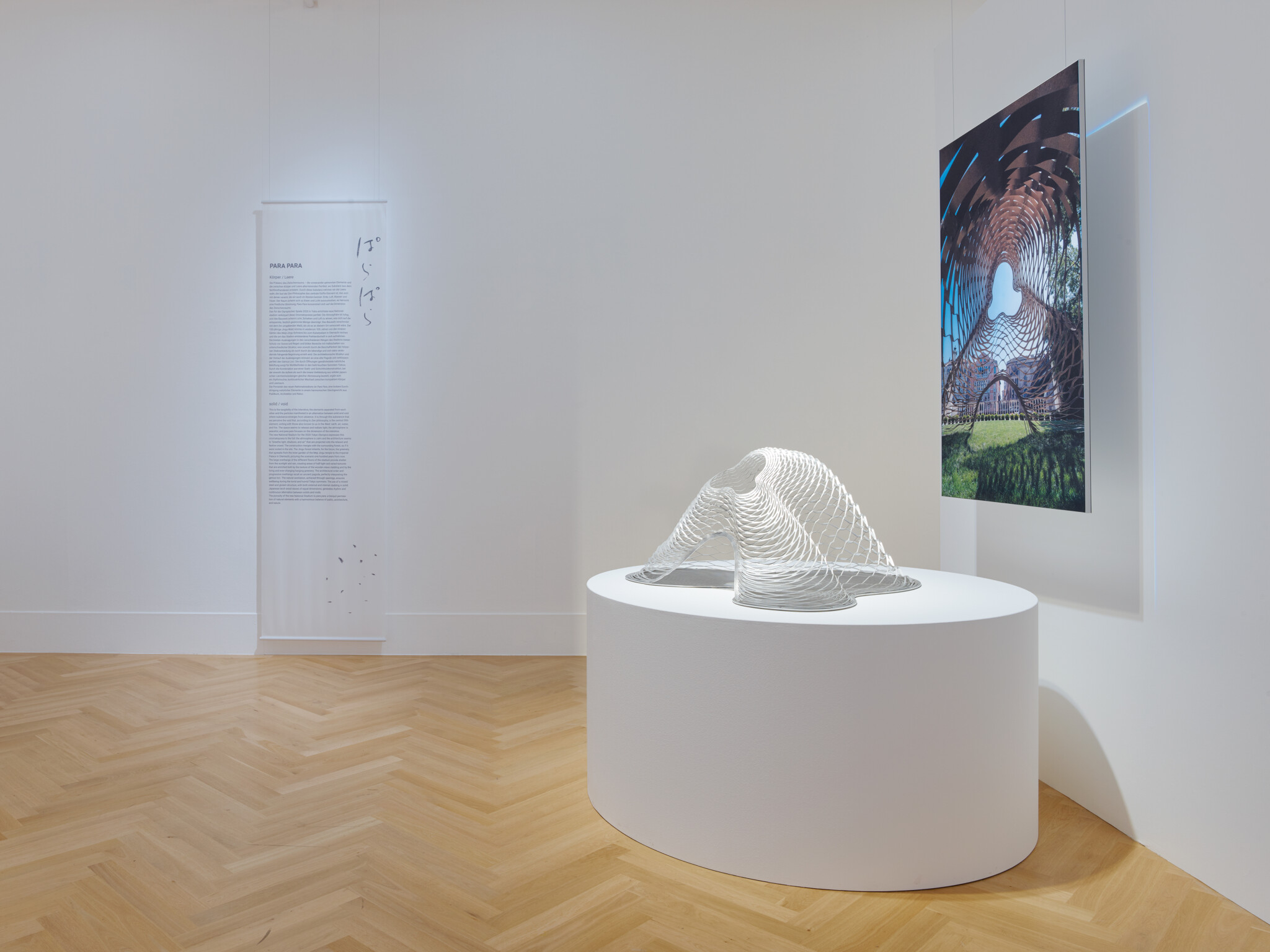
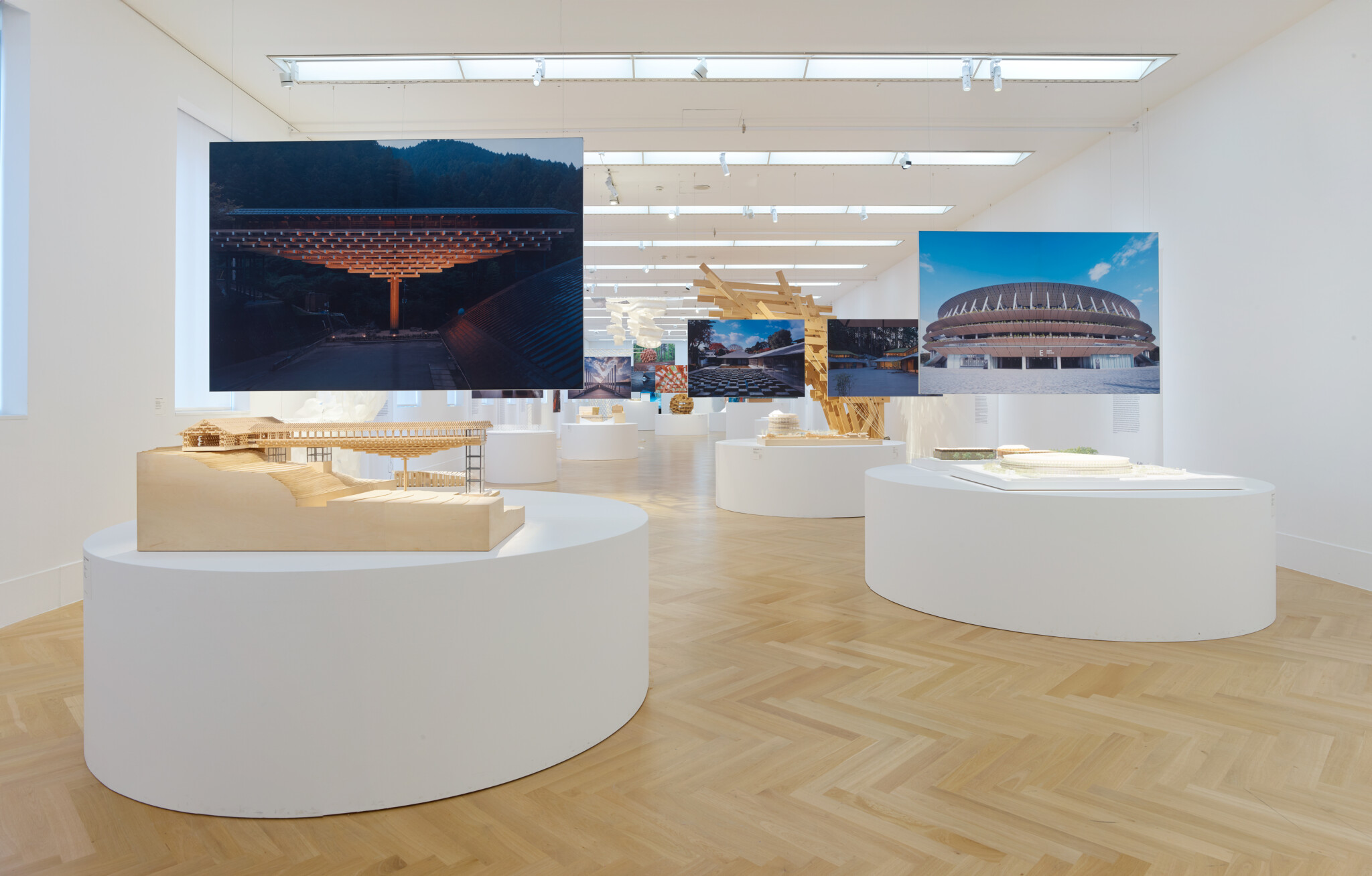
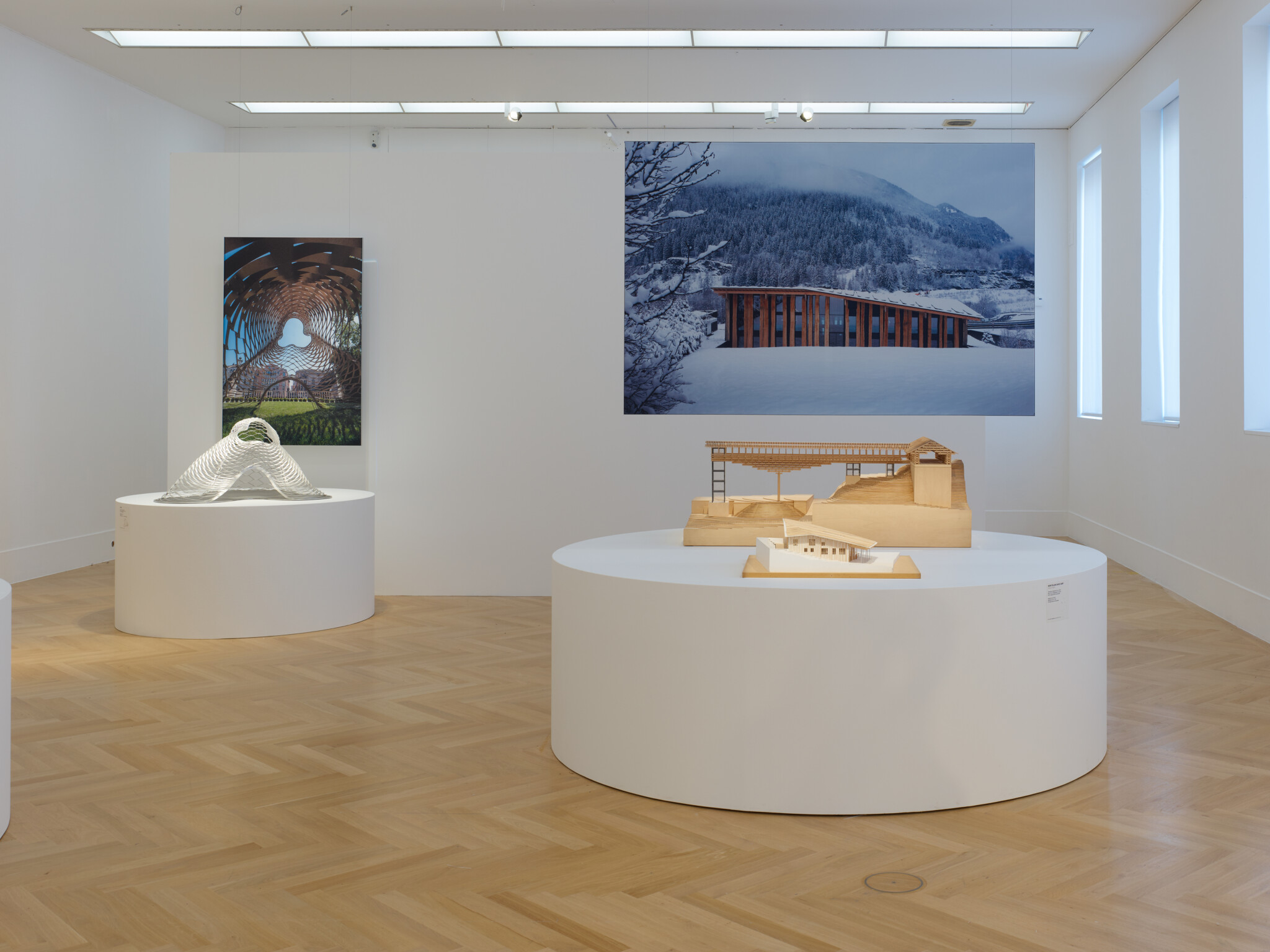
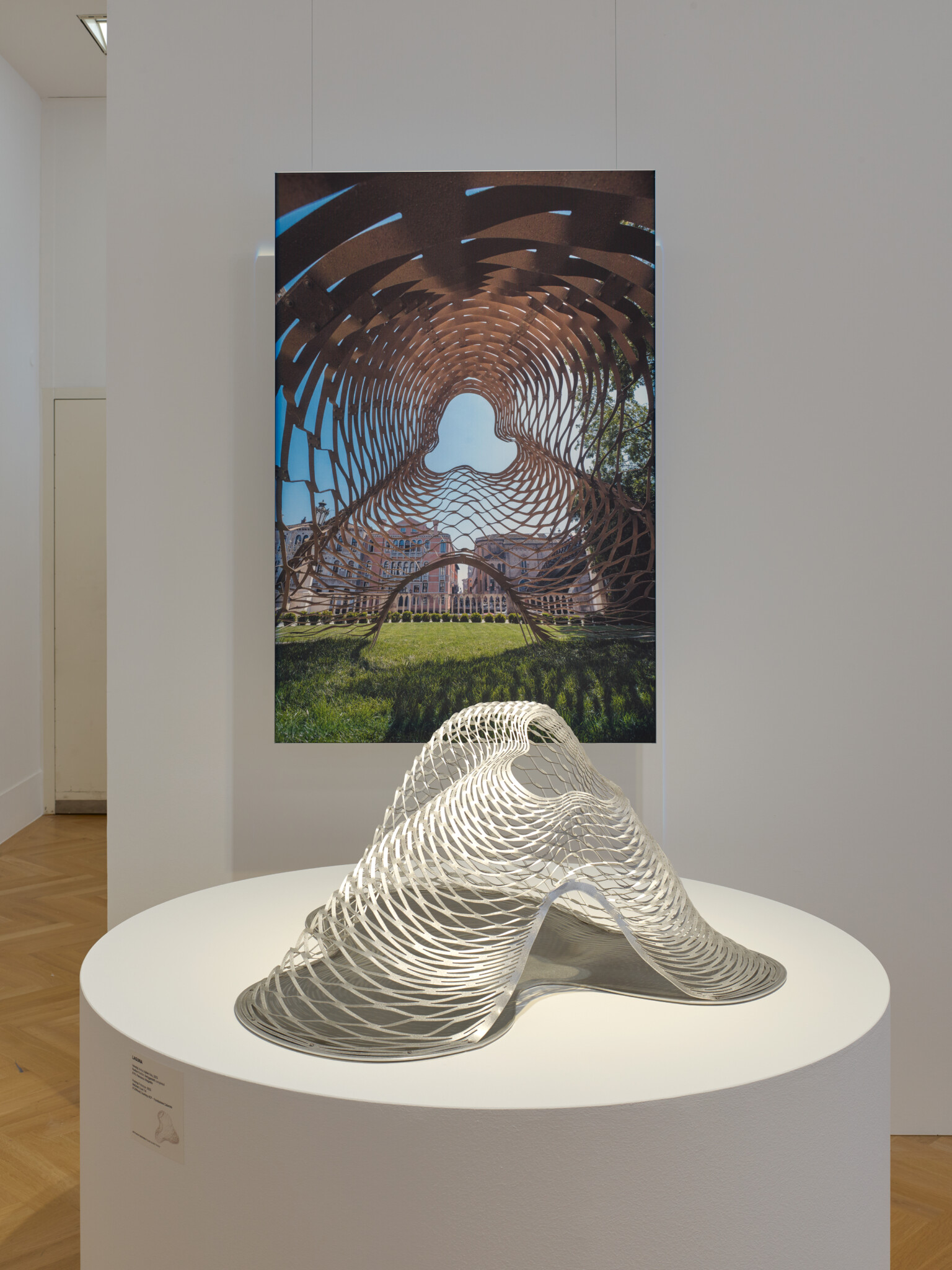
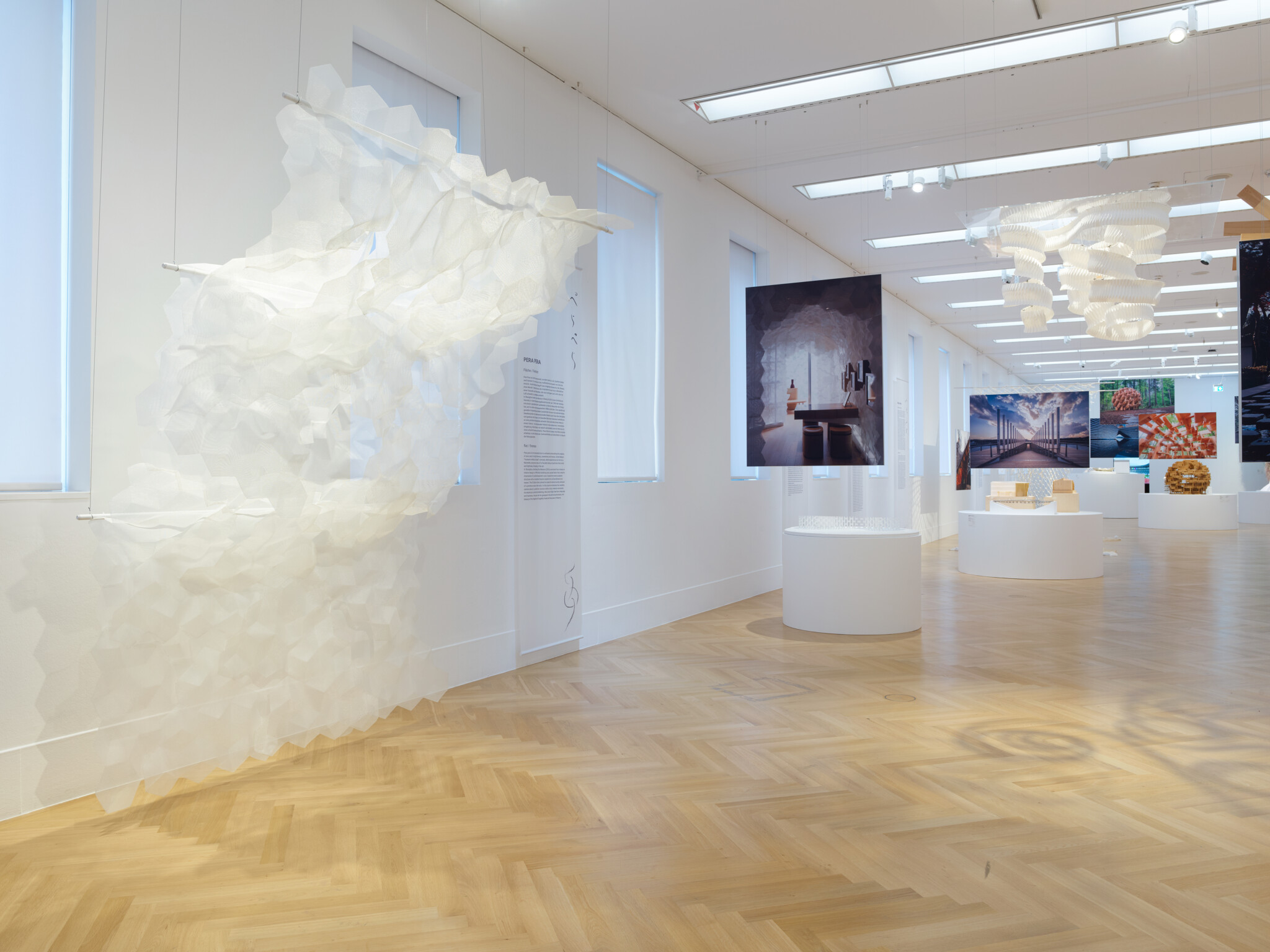
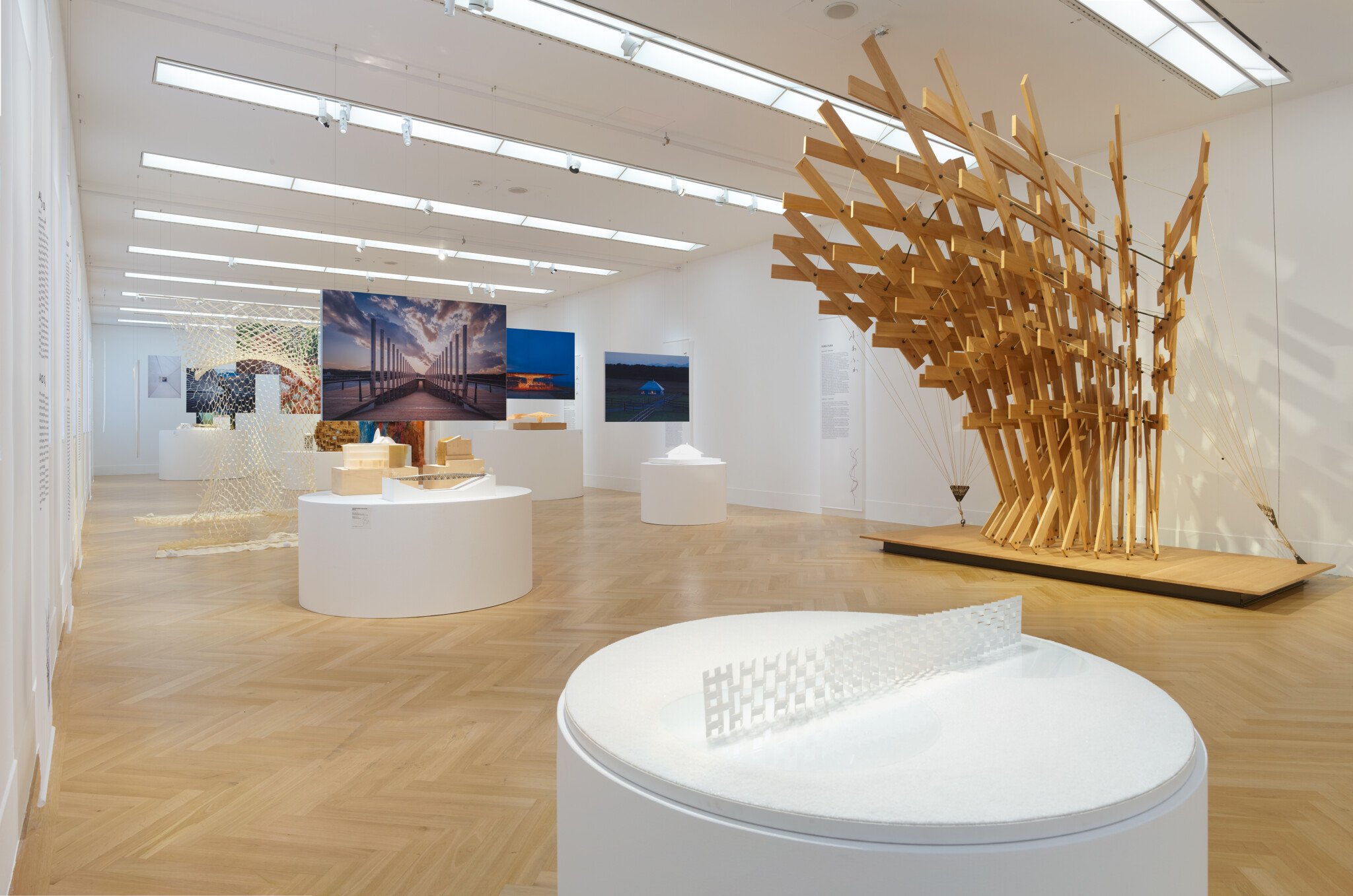
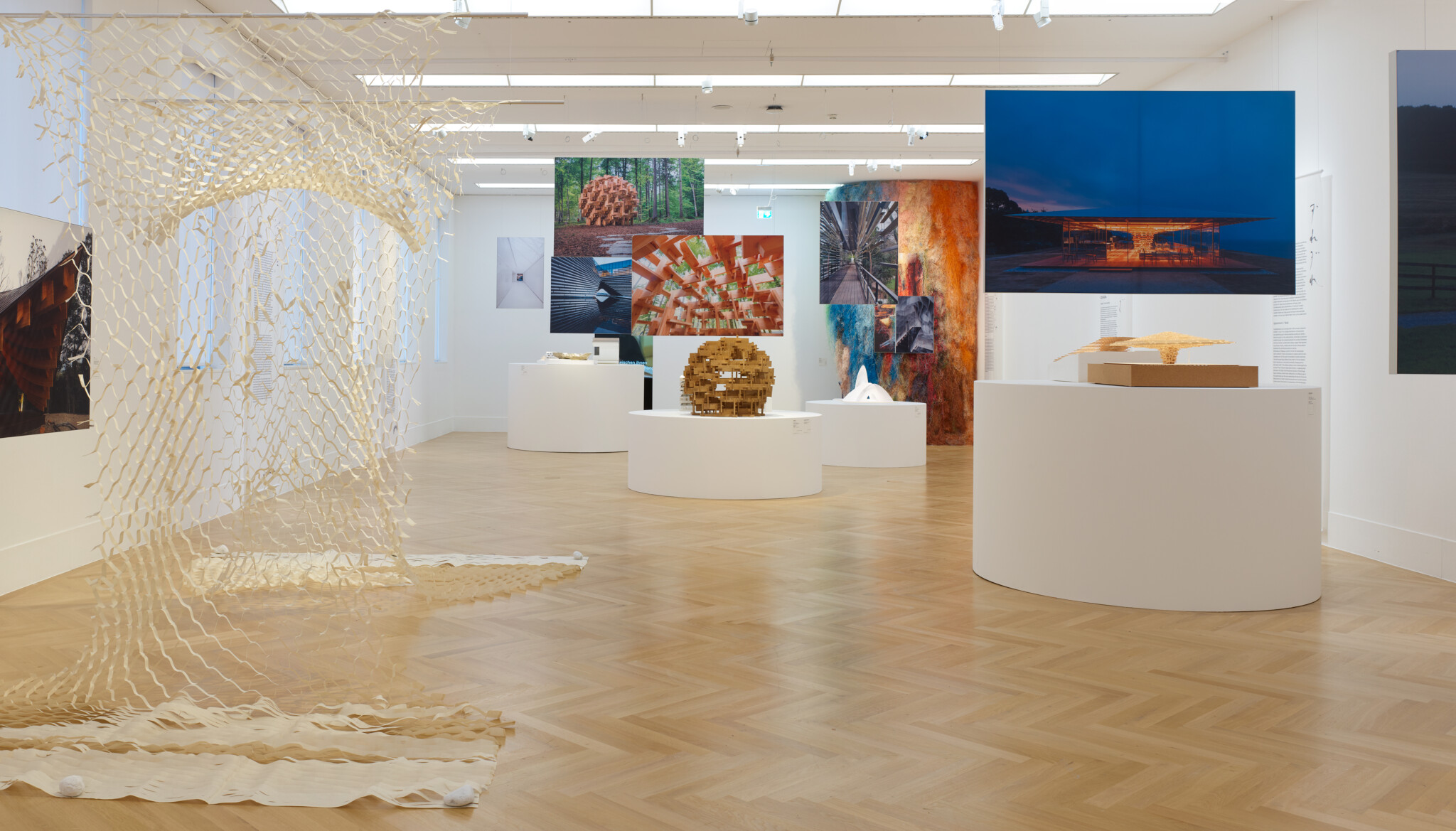
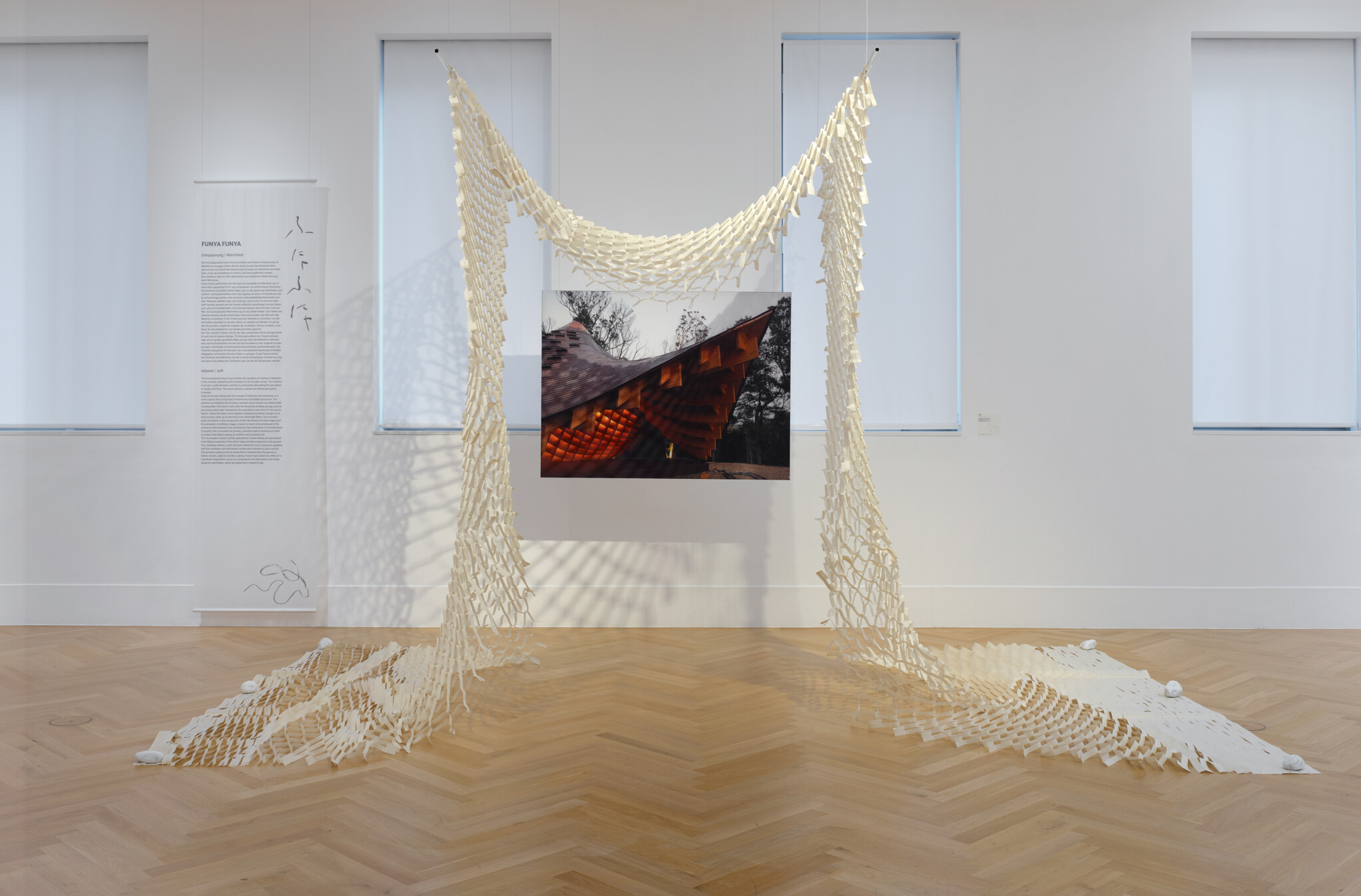
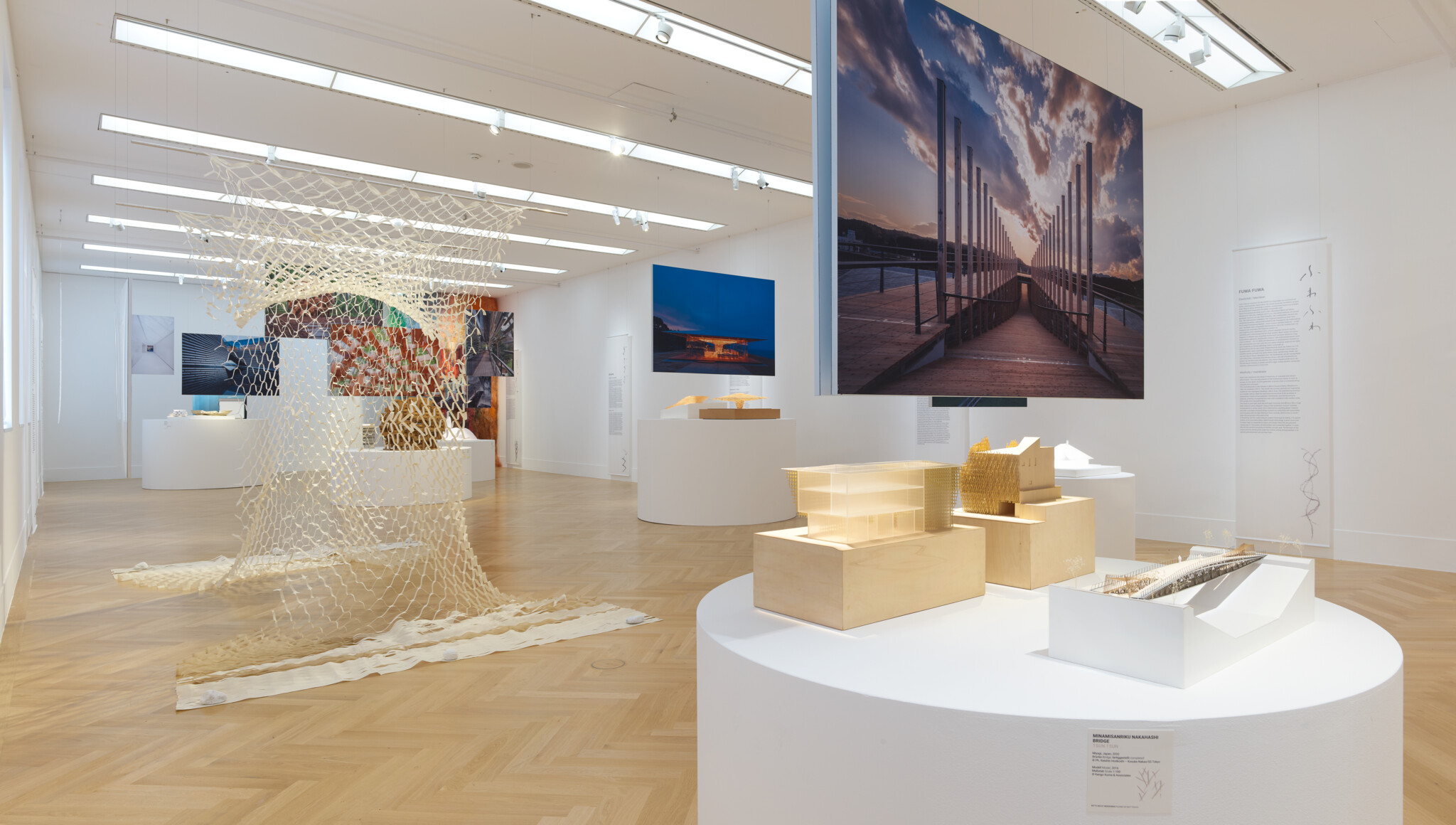
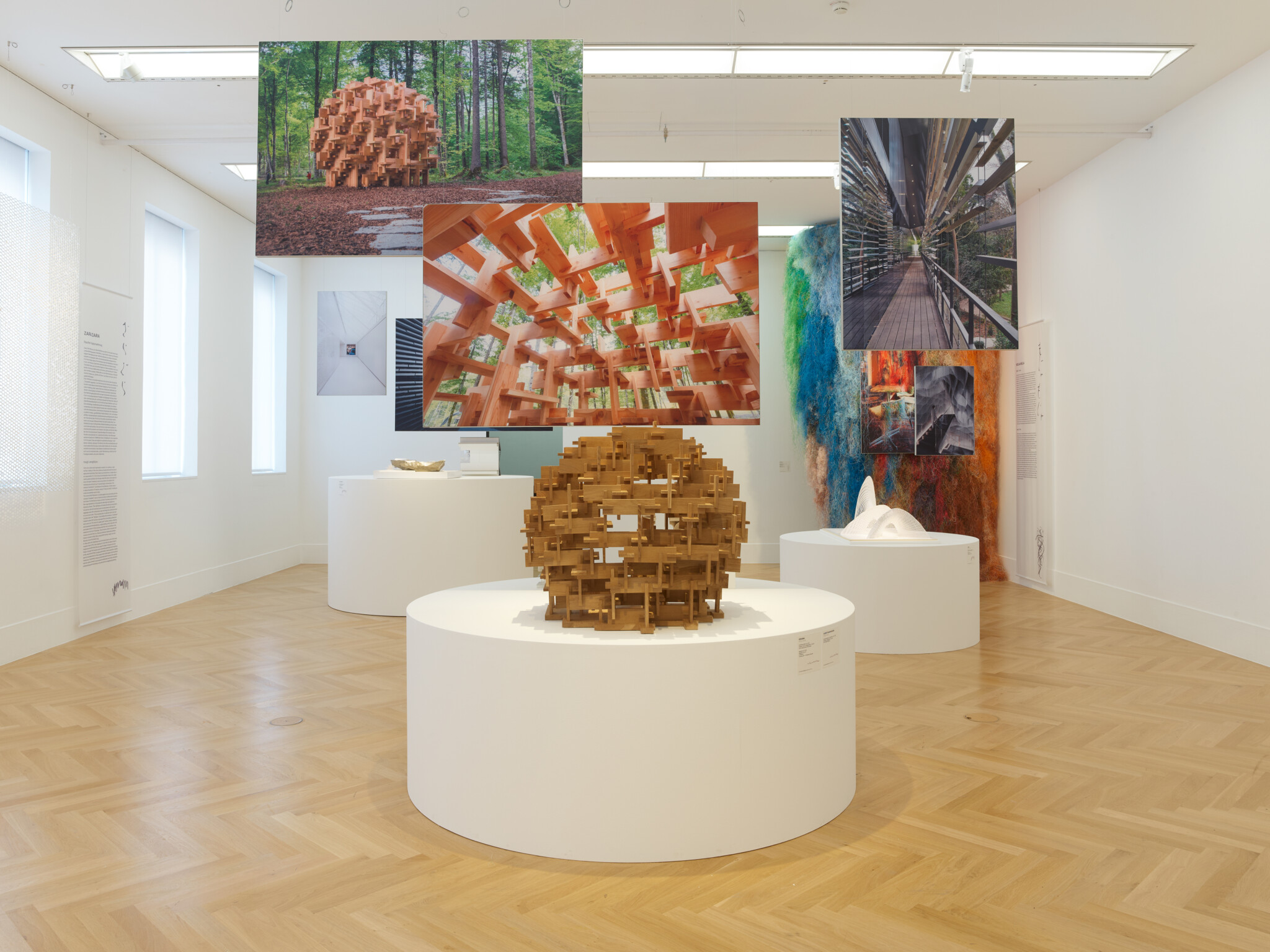
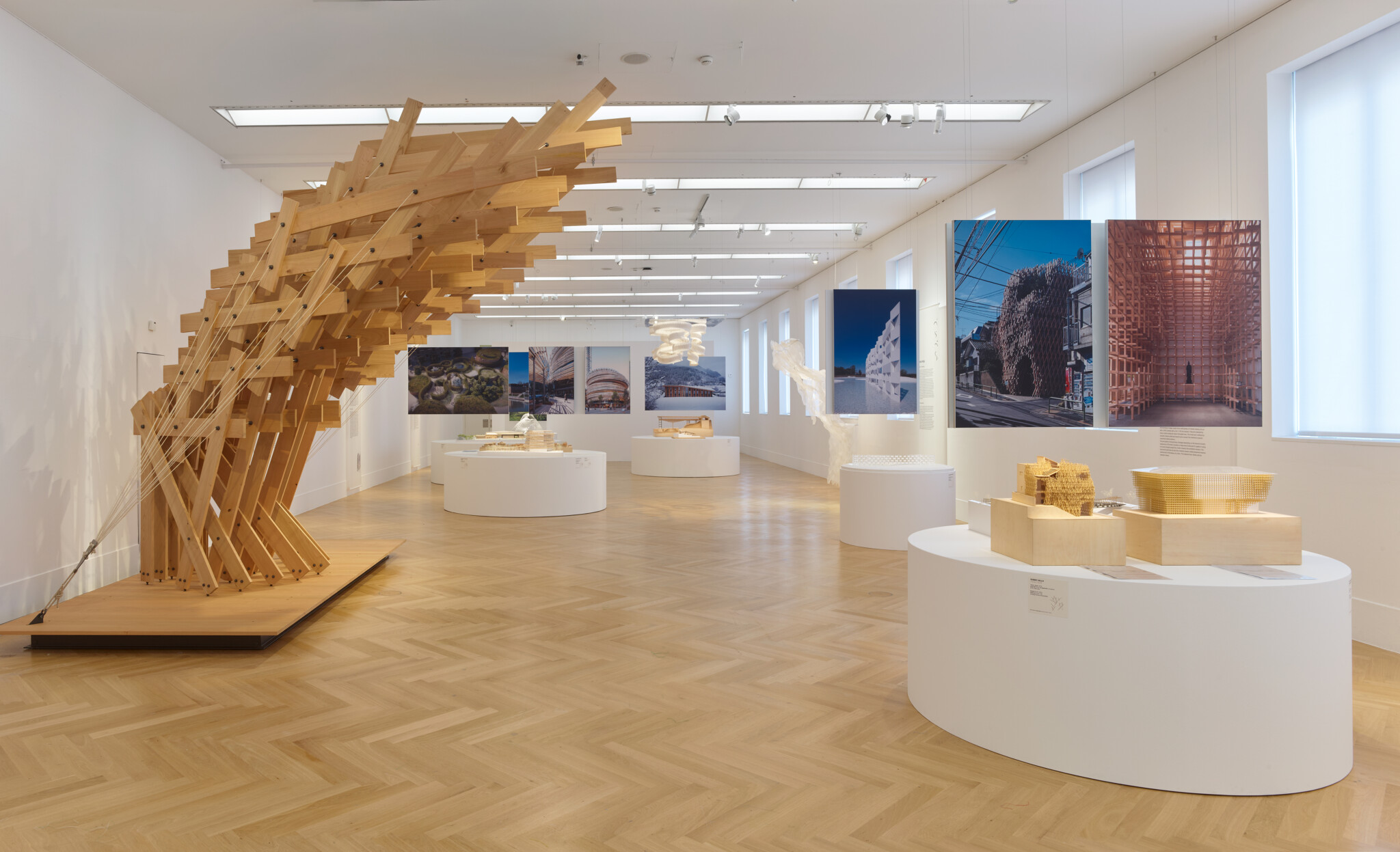
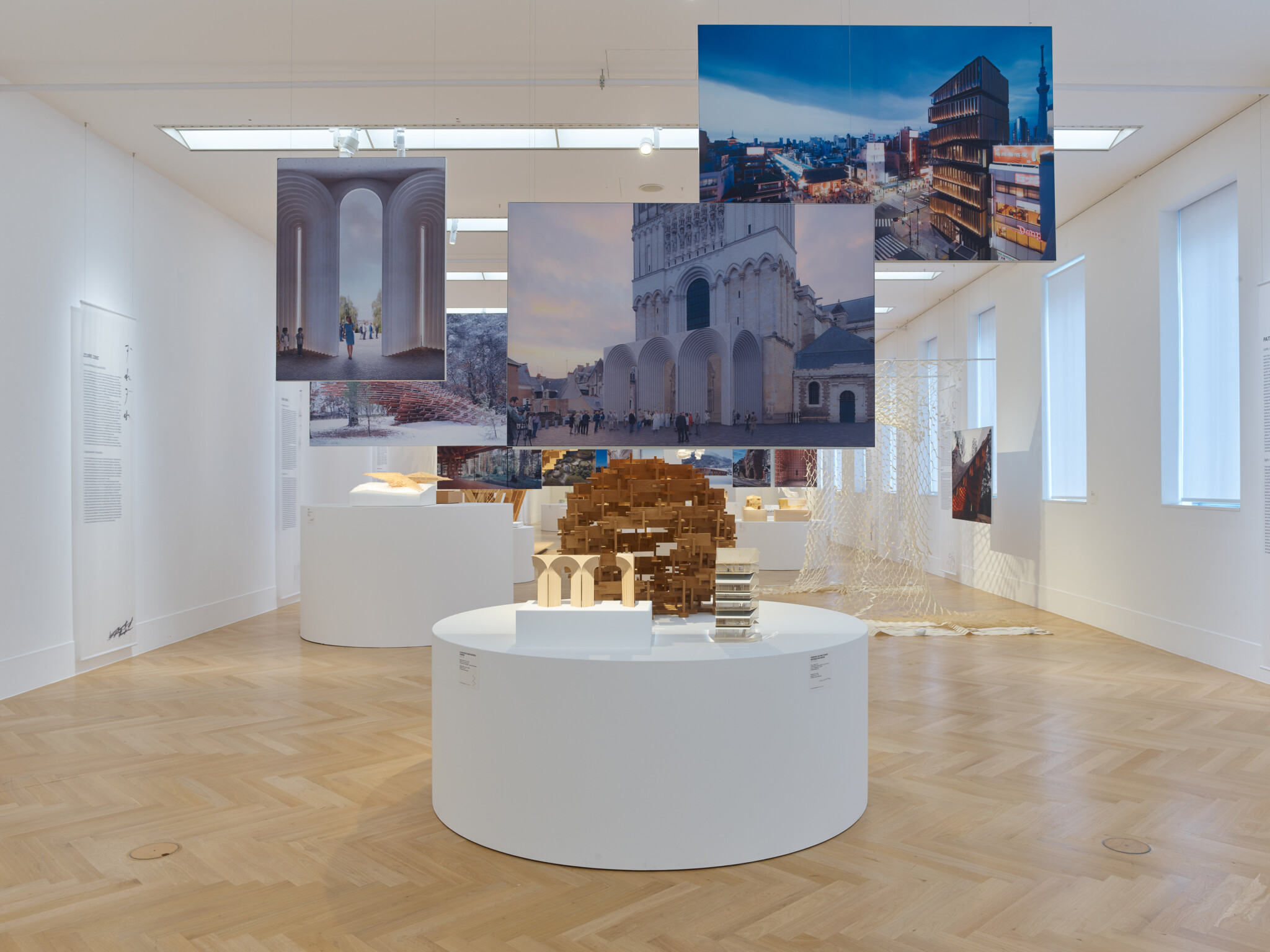
In Bonn, the architectural models were displayed in a large, rectangular white hall, organized according to thirteen distinct onomatopoeic categories. Each onomatopoeia was used to classify materials, accompanied by architectural formal keywords such as solid, void, horizontal, particulate, porous, fold, thinness, and thickness, or descriptions of physical phenomena like pressure and elasticity.
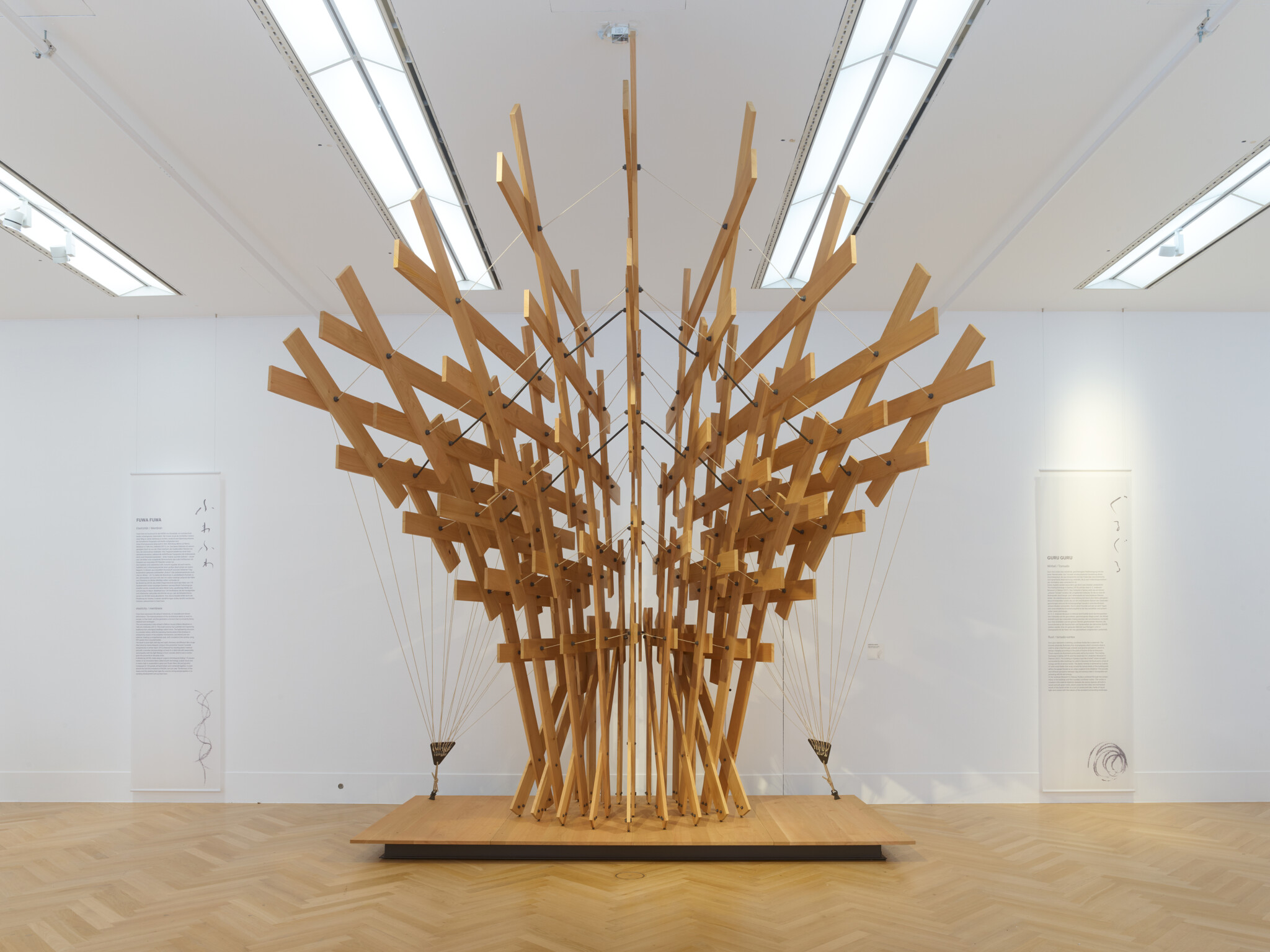
Para-para, Sara-sara, Guru-guru, Pata-pata, Giza-giza, Zara-zara, Tsun-tsun, Suke-suke, Moja-moja, Funya-funya, Pera-pera, Fuwa-fuwa, Zure-zure—these terms express the texture of materials, the movement of light and wind, and human physical sensations. They are indispensable elements of KKAA’s architectural design, which prioritizes the sensory experience of the human body.